Laura

/Laura
­

About Laura

This author has not yet filled in any details.
So far Laura has created 55 blog entries.

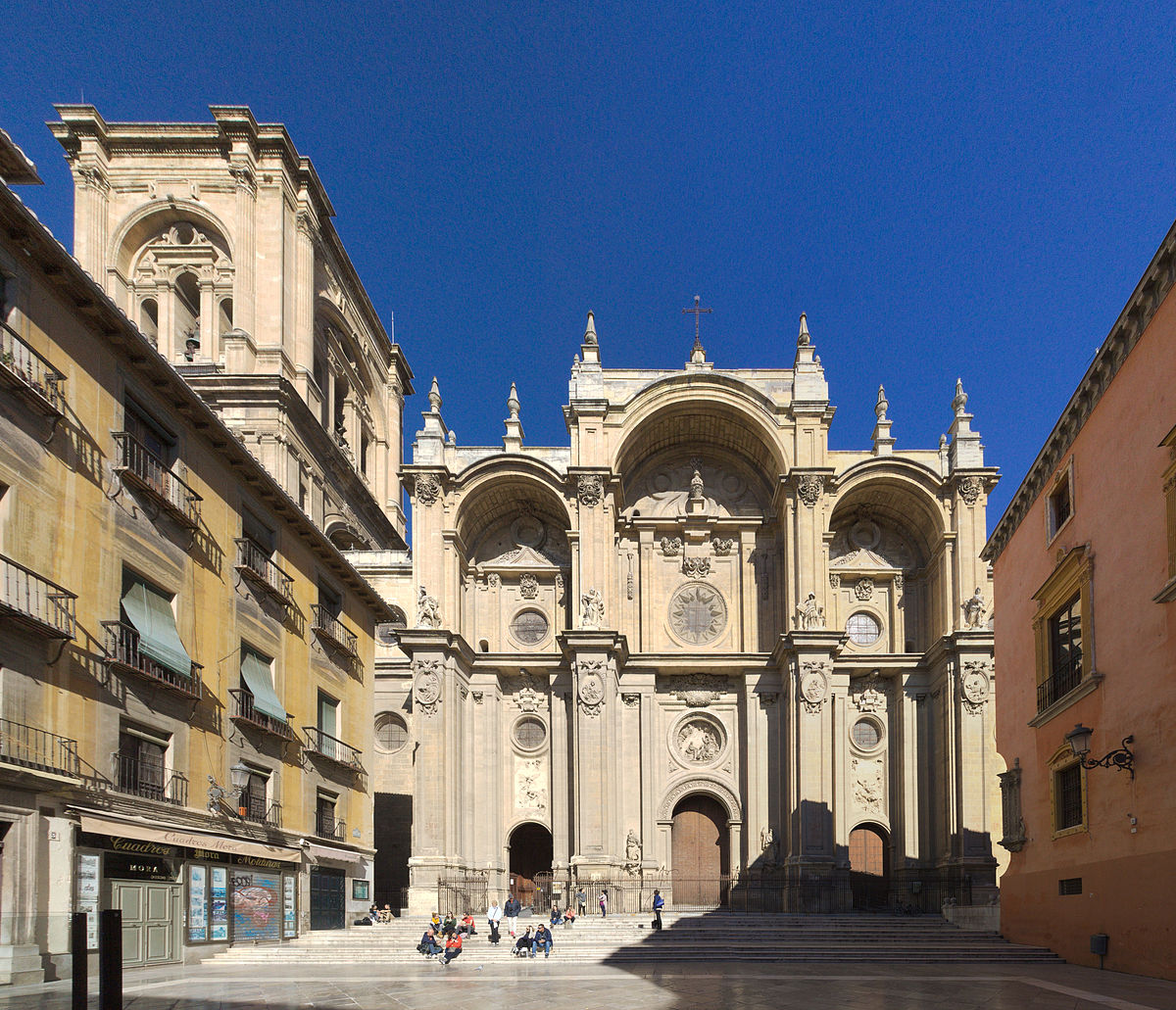
The imposing Cathedral of Granada

The Holy and Apostolic Metropolitan Cathedral Church Basilica of the Incarnation of Granada or shorter S.A.I. Metropolitan Cathedral Basilica of Granada is a Catholic temple in the Spanish city of Granada, seat of the archdiocese of the city.
The temple is one of the masterpieces of the Spanish Renaissance. It is dedicated to the mystery of the Incarnation of the Lord.
It is the first Renaissance church in all of Spain and one of the best examples of this architectural style.
For all this, its history and its monumentality, it becomes one of the most important events in the city.
The visit to the Cathedral allows to combine the Muslim past (like many other cathedrals in Andalusia, it was built on top of the city’s main mosque)  of the city represented by the Alhambra and the Albaicín neighborhood, with the Catholic influence.
The Cathedral of Granada was designed to be one of the most impressive on the continent thanks to its two huge 81-meter high towers.
The architectural ensemble of the Cathedral becomes a space with a multitude of interesting elements and a large container of works of art.
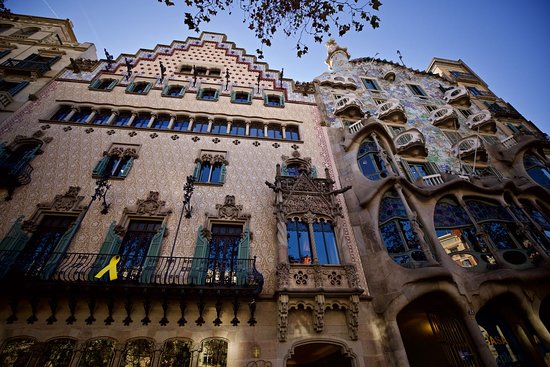
Casa Amatller. One of the most emblematic houses in Barcelona

Casa Amatller is a modernist building in Barcelona adjacent to Casa Batlló and close to Casa Lleó Morera. It was designed by the architect Josep Puig i Cadafalch between 1898 and 1900. The three buildings form what is known as The Apple of Discord, alluding to the mythological dispute between the goddesses Hera, Aphrodite and Athena, as they are considered to be those of greater beauty.

The building was commissioned by the chocolate industrialist Antoni Amatller to Josep Puig, who devised a model of an urban Gothic palace, with a flat façade, a central courtyard and a staircase that gives access to the main rooms.

On the façade you can see the two asymmetrical doors linked by a Saint George made by the sculptor Eusebi Arnau. Throughout the façade there is a sgraffito that joins the ceramic in a delicate way

The style is a mix between Catalan Gothic and Flemish (characterized by the flat triangular shape of the upper part of the façade).

Spain, a World Heritage Site

Spain is the third country with the most World Heritage Sites. Discover all our wonders!
With 44 UNESCO World Heritage Sites, Spain is the third country in the world in the ranking of countries with the most UNESCO sites in the world, only behind Italy (with 49) and China (with 45)
The rich history of the bull hide and its islands has given a lot over the centuries, and a good example of this is the variety of protected monuments: from cave paintings to industrial engineering and modernism. In addition to some natural parks and intangible heritage, how many do you know?

Here we bring you the 30 UNESCO World Heritage monuments that you should not miss:

-Alhambra, Generalife Gardens and Albaicín neighborhood in Granada, Andalusia

-Historic center of Córdoba, Andalusia

-Cathedral, Alcazar and Archivo de Indias, Seville, Andalusia

-Renaissance monumental ensembles of Úbeda and Baeza, Andalusia

-Mudejar architecture, Aragon

-Monuments of Oviedo and the Kingdom of Asturias, Asturias

-Ibiza, Balearic Islands

-San Cristóbal de la Laguna, Tenerife, Canary Islands

-Altamira Cave, Cantabria

-Toledo, Castilla-La Mancha

-Fortified city of Cuenca, Castilla-La Mancha

-Burgos Cathedral, Castilla y León

-Old town of Ávila and churches outside the walls, Castilla y León

-Old town and aqueduct of Segovia, Castilla y León

-Old town of Salamanca, Castilla y León

-Gaudí’s works, Catalonia

-Poblet Monastery, Catalonia

-Palace of Catalan Music and Hospital de San Pablo, Barcelona, Catalonia

-Archaeological site of Tarraco, Tarragona, Catalonia

-Catalan Romanesque churches of the Boí Valley, Catalonia

-Lonja de la Seda de Valencia, Valencian Community

-Old town of Cáceres, Extremadura

-Archaeological site of Mérida, Extremadura

-Old town of Santiago de Compostela, Galicia

-Roman wall of Lugo, Galicia

-Hercules Tower, La Coruña, Galicia

-Monasteries of San Millán de Yuso and Suso, La Rioja

-Monastery and Site of El Escorial, Madrid

-University and historic center of Alcalá de Henares, Madrid

-Vizcaya Bridge, Basque Country


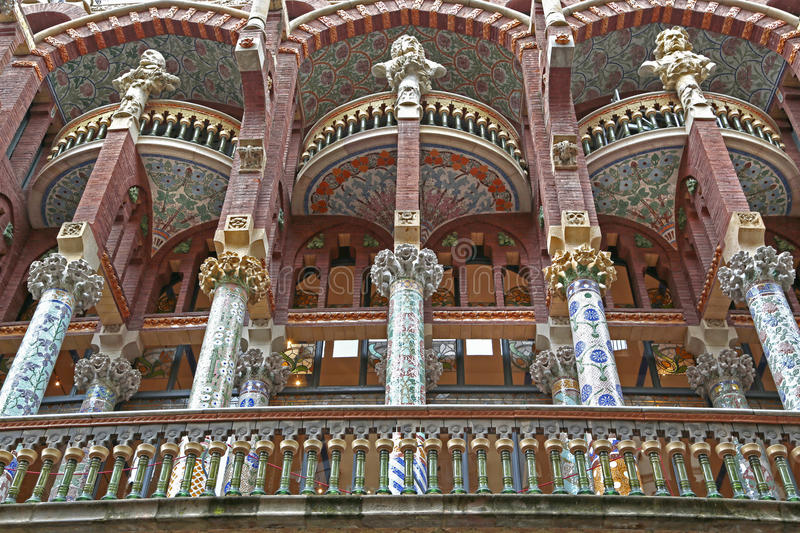
Spain. Barcelona. The Palau of Catalan Music

The Palau of Catalan Music ( Palau de la Música Catalana)  was built between 1905 and 1908 by the modernist architect Lluís Domènech i Montaner as the headquarters of the Orfeó Català financed with funds from popular subscription.
The building is located in the Sant Pere neighborhood, one of the most beautiful areas of Barcelona.
The Palau de la Música Catalana is an architectural pearl of Catalan modernism, the only concert hall declared a World Heritage Site by UNESCO (December 4, 1997), which is currently an unavoidable meeting point for the cultural and social life of Catalonia.
It also constitutes a symbolic and sentimental heritage of an entire town that identifies with its history.
The modernist building is articulated around a central metal structure covered in glass, which when receiving natural light turns the most significant building in Domènech i Montaner’s work into a magical music box where all applied arts are combined: sculpture, mosaic , stained glass and wrought iron.
In order to enjoy this masterpiece, the Palau de la Música Catalana offers guided tours, an unmissable appointment to discover all the corners of this modernist jewel.

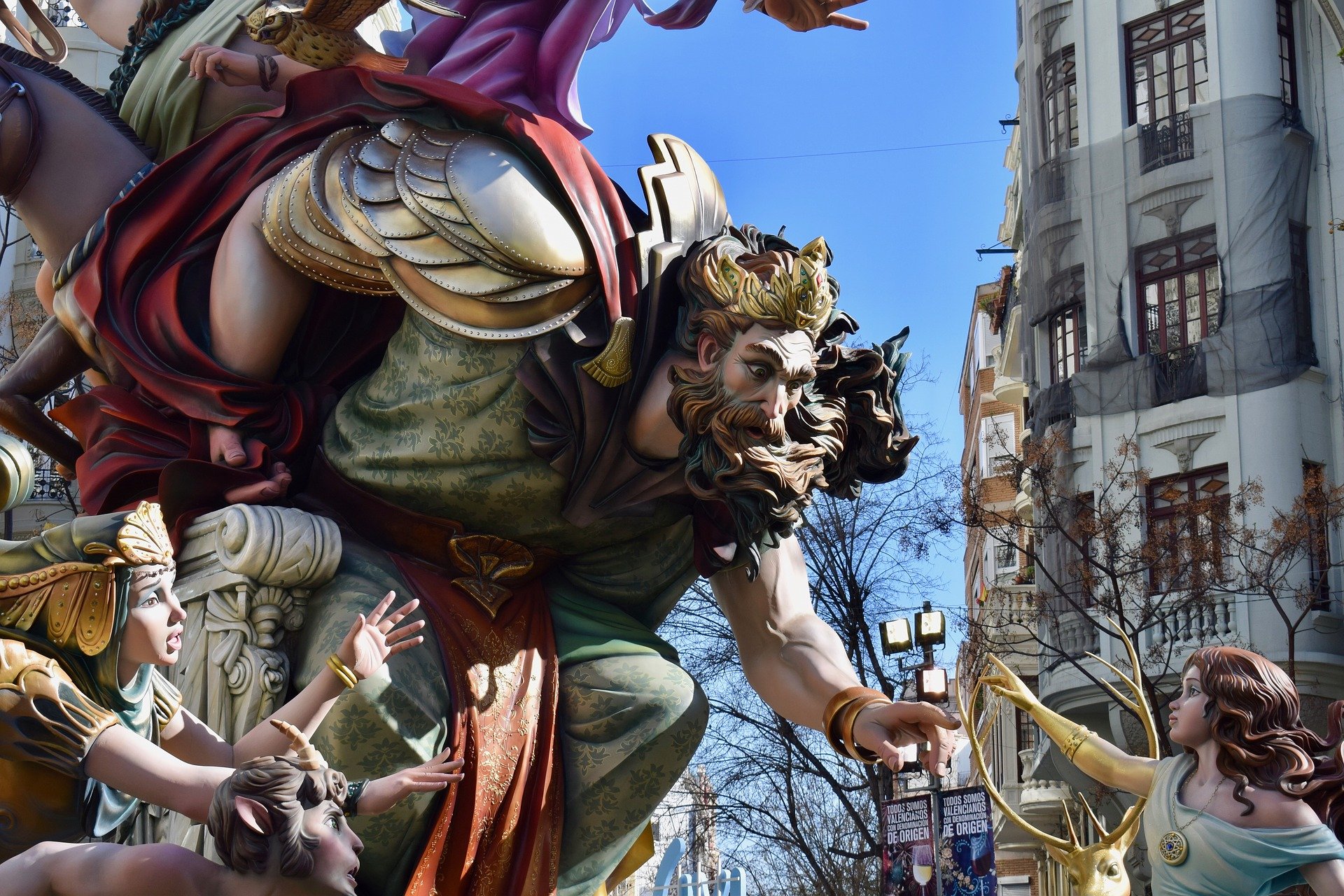
Spain. Valencia. Las Fallas, a World Heritage Site

Las Fallas de Valencia are festivals that go from March 15 (plantá) to March 19 (cremá) with a tradition rooted in the Spanish city of Valencia and different towns in the Valencian Community. Officially they begin on the last Sunday in February with the act of the maid.
Currently, this festival has become a very important tourist attraction, since in addition to being classified as a festival of International Tourist Interest, in November 2016 Unesco inscribed them on its Representative List of the Intangible Cultural Heritage of Humanity.
They are also called Josephine festivals or festes de Sant Josep (in Valencian), since they are celebrated in honor of San José, patron saint of carpenters, who was a very widespread guild in the city when they began to be celebrated in the late 19th century, which it has kept until today, given the importance of the furniture industry in the region.

In medieval Valencian, the word falla (from the Latin fac [u] la, diminutive of fax, ‘torch’) was used to name the torches that were placed on top of the watchtowers.

In the Llibre dels Fets, it is mentioned that the troops of King Jaime carried fallas (torches) to illuminate themselves, both for the road and at the entrance of the tents.
Torches were also used to light a party.
Reference is also made to this term to refer to the bonfires and lights that were lit on the eve of extraordinary and patron saint festivals.
On the eve of Saint Joseph’s Day bonfires were lit to announce their festivity, this ritual practice receiving the name «cremà».

The popular version of the origin of the fallas according to the Marquis of Cruïlles, were started by the carpenters’ union who burned on the eve of the day of their patron Saint Joseph, in a purifying bonfire, the shavings and leftover old junk, cleaning the workshops before entering spring. In addition, they burned their ‘»parots»‘ (structures from which the lamps hung that gave them light) since with the end of winter and the arrival of spring, and as the days became longer, they were no longer necessary.
According to this theory, popular inventiveness gave these parots human form.
This romantic legend of the origin of the festival contrasts with the documentation preserved in the Carpenters Guild, which does not cite the construction of fallas on its eve, but rather the religious festival of March 19 itself.

This unusual year, it is planned that the Fallas de Valencia 2021 will be held from September 1 to 5.
An opportunity again to enjoy these holidays after the cancellation of last year 2020, due to the COVID19 pandemic.

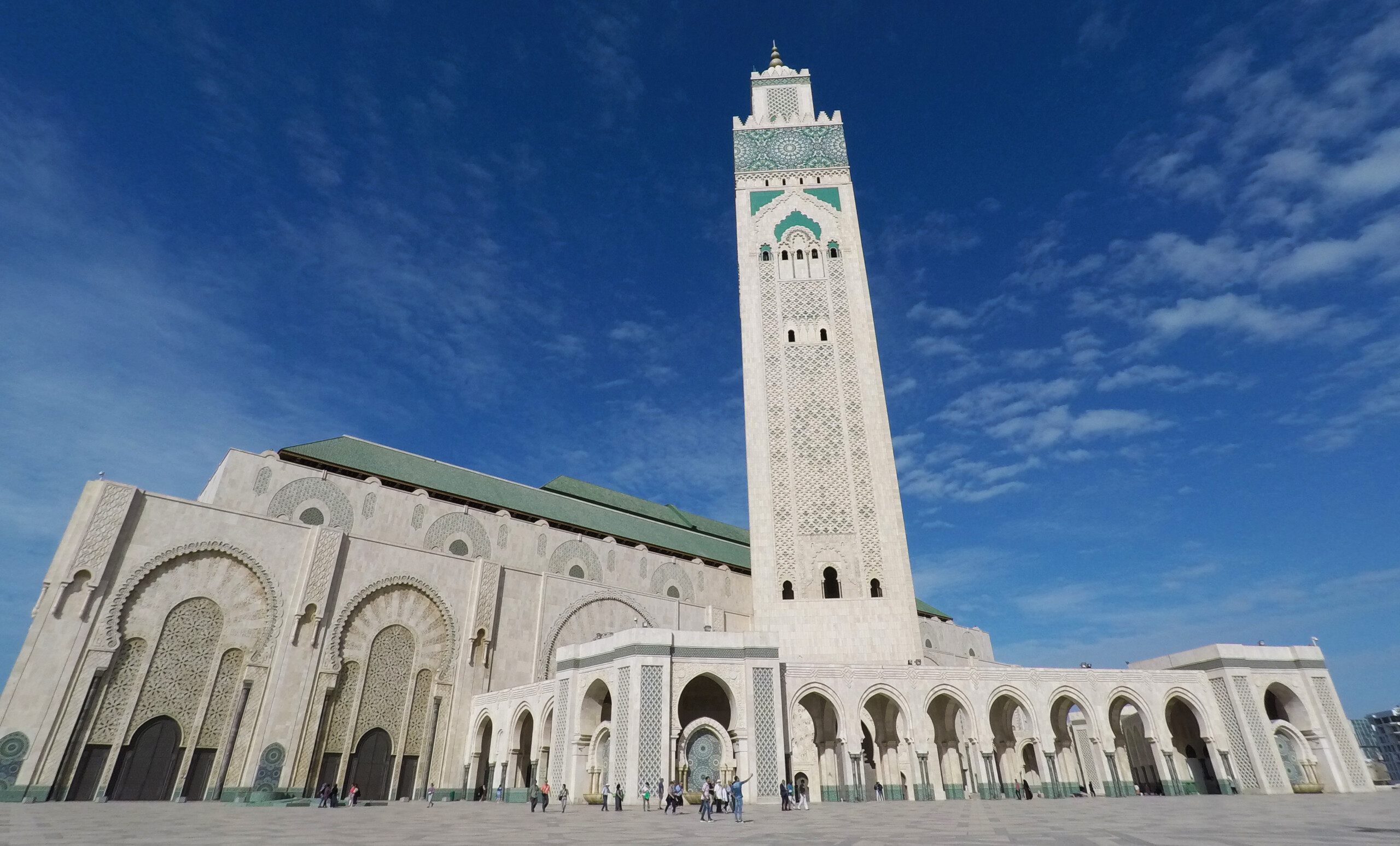
Morocco. Casablanca. The Hassan II mosque, a landmark for the city of the sea

The Great Hassan II Mosque of Casablanca: majestic, spectacular, grand… It is a real wonder.
Since its inauguration in 1993, its 200-meter-high minaret or minaret made it the tallest temple in the world, until the inauguration in 2019 of the Djamaa El Djazair Mosque, in Algiers, Algeria, whose minaret is 265 meters high.
It is located on an artificial island on the Atlantic Ocean in reference to a verse from the Koran that indicates that «the throne of Allah is in the water».
Its construction began in 1989 and concluded in 1993. It required 53 thousand square meters of carved wood, as well as more than 10 square meters of mosaic and between 50 and 80 million hours of work.
It has the latest technologies such as earthquake resistance, roof that opens automatically, heated floor and electric doors.
The architectural project was commissioned by King Hassan II of Morocco, designed by the French studio Michel Pinseau.
The Moroccan king’s idea was to provide Casablanca, the country’s economic capital, with an emblematic building that would once again place it as the spearhead in architectural matters and that would represent the Arab-Muslim tradition of the country, as well as its entry into modernity. Through this monumental work, it was also sought for the city to have its own landmark building, in the same way as the Moroccan imperial cities: Fez and its Karaouyine, Rabat and its Hassan Tower, and Marrakech and its Koutoubia mosque.
One of the reasons why the Hassan II Mosque is worth visiting is precisely that it is possible to do so. The vast majority of Moroccan mosques are not open to visitors and their access is restricted to believers to perform daily prayers. This is the case, at least, with the religious temples of the great cities of the country: the Koutoubia in Marrakech, the Al Karaouine in Fez, the Hassan in Rabat, the Great Mosque of Tangier … and a long etcetera. However, non-believing visitors can enter this site, within strict hours and after paying the entrance fee.


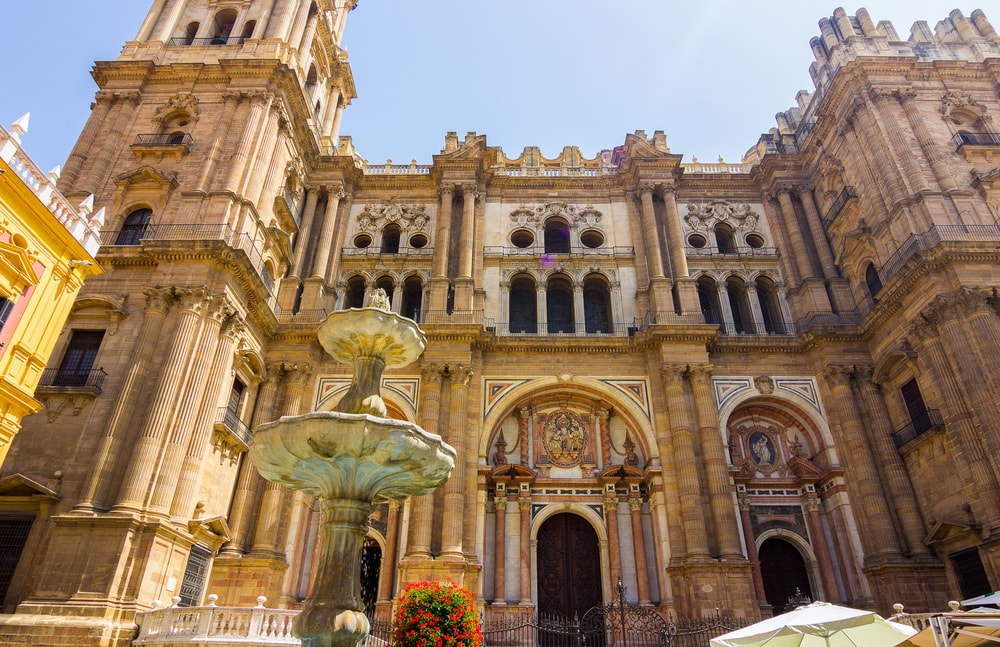
Malaga Cathedral

Malaga Cathedral was built between the 16th and 18th centuries on the city’s Main Mosque, of which only the magnificent Patio de los Naranjos remained. When the Christians conquered Malaga in August 1487, they consecrated the then mosque and turned it into the Church of Santa María de la Encarnación, to which the Catholic Monarchs were especially devoted.
The renovations began in 1510 when the impressive Gothic façade was built. In the following years, the Cathedral was adorned with several chapels and altars of Baroque and Renaissance influence.
The Cathedral began to be used for worship only in 1768, although the towers and the decoration of the new chapels were still to be completed. The Napoleonic wars and lack of funds left the Cathedral incomplete, and it has remained so to this day.
Although its full name is Santa Iglesia Catedral Basílica de la Encarnación, the people of Malaga affectionately call it «La Manquita». This nickname is due to the lack of the second tower, which was in the original plans of the architect Diego de Siloé.
One version of the legend tells that the funds destined for the construction of the second tower were donated to the American War of Independence, while others affirm that they were destined for the more urgent construction of a highway that would connect Malaga with Velez-Malaga.
In any case, the construction of the Cathedral came to a standstill at the beginning of the 17th century, and the Cathedral has been left with «one hand» ever since.
Malaga Cathedral is the most famous monument in the city, visible from anywhere in the capital of the Costa del Sol. It is the highest Cathedral in Andalusia, and one of the most peculiar due to the absence of the one that was intended to be your second tower.

You cannot leave Malaga without visiting its cathedral. Both for its artistic contribution and for its beauty and symbolism, you will fall in love with the Cathedral of Malaga as soon as you enter its doors.


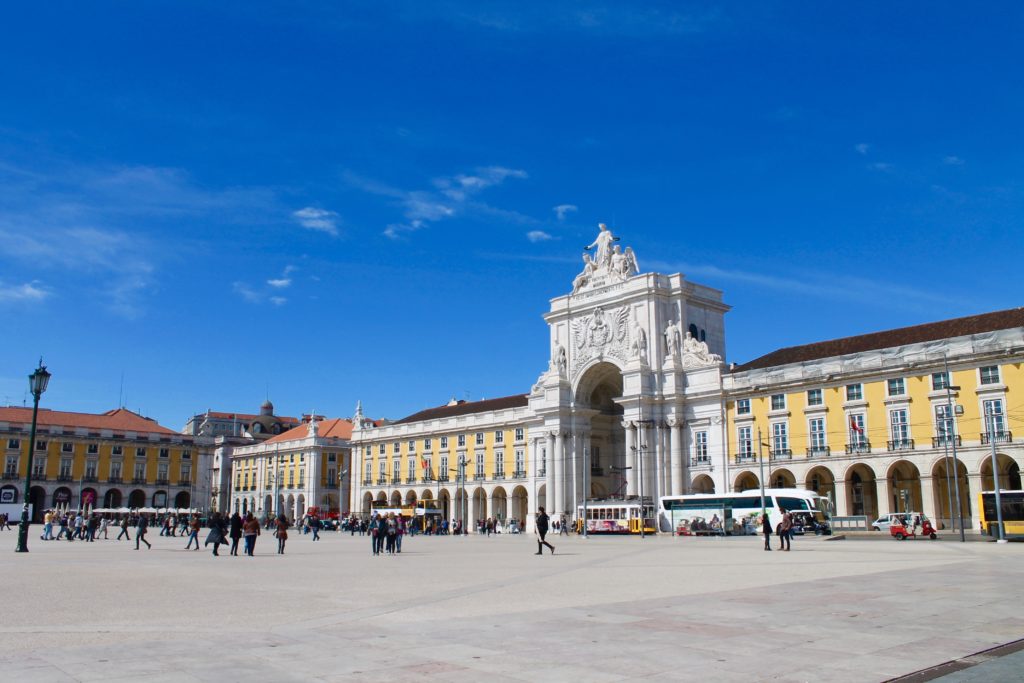
Praça do Comercio in Lisbon, Portugal

The Praça do Comércio  (Commerce Square, better known as Terreiro do Paço), was the land where the Royal Palace of Lisbon was located for more than 200 years.
It is one of the most important squares in Lisbon and, with a great view of the Tagus estuary, it is the nerve center of the city
It is one of the largest squares in Portugal and Europe.
It is a space full of life and movement, mandatory for all visitors.
In 1511, D. Manuel I changed his residence from the Castle of San Jorge to this place next to the Tagus. This palace and its library with more than seventy thousand volumes was destroyed by the Lisbon Earthquake. In the reconstruction, the square became a fundamental element of the plans of the Marquis of Pombal. The new buildings, with arcades surrounding the plaza, are currently occupied by ministries.
Several historical events have occurred in this square:

Before the 1755 earthquake, there was the Royal Palace, in whose library 70,000 volumes and hundreds of works of art were kept, including paintings by Titian, Rubens and Correggio. Everything was destroyed. The actual archives with the documents relating to the exploration of the ocean, including, for example, numerous letters from the discovery of Brazil and other ancient documents were also lost.

On February 1, 1908, King Carlos and his son, Luis Felipe, were assassinated when they passed through the square.

On April 25, 1974, the square witnessed the rebellion of the Armed Forces Movement, which overthrew the government of Marcello Caetano and the New State, a revolution without bloodshed.

On May 11, 2010, Pope Benedict XVI, during his pastoral visit to Portugal, celebrated a mass in the square

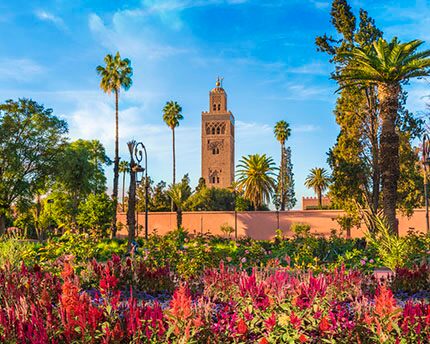
The Koutoubia Mosque, the main landmark in Marrakech

The Koutoubia, is a mosque, a building for the worship of the Islamic religion, built in the century XII in the city of Marrakech in Morocco, representative of Almohad art. It is the largest mosque in Marrakech.
The mosque is built with red stone, formerly plastered, and has six rooms in succession, one above the other. It was designed in such a way that anyone was prevented from looking inside from the minaret at the king’s harems.
It is designed in a classic Almohad style and the towers are adorned with copper globes.
It is situated in the southwest of the Medina of Marrakech and southwest of the Jamaa el Fna square next to the Mohamed V avenue.
The mosque is adorned with curved windows, a band of ceramic inlaid, pointed merlons and decorative arches; It has a large square with gardens, and it is illuminated with spotlights at night.
The Koutubía stands out for its 66-meter high minaret (according to other sources, 77 meters), which is the tallest building in the city.
Includes a needle and orbs. The minaret is the symbol and landmark of the city and, without a doubt, its most representative monument.
It was completed in the reign of the Berber Almohad caliph Yaqub al-Mansur (from 1184 to 1199) and served as a model for the construction of the Giralda in Sevilla (Spain) first, and the unfinished Hasan Tower in Rabat (Morocco) later.
The mosque is located about 200 meters west of the souk on Jemaa el Fna square, a prominent market square that has existed since the creation of the city.
To the west and south of the mosque is a prominent rose garden, and across the avenue Houmman-el-Fetouaki is the small mausoleum of Yusuf ibn Tashfin, the builder of Marrakech, a simple crenellated structure.
The minaret is a symbol of Marrakech. All the names and spelling of the Koutoubia mosque, including Jami ‘al-Kutubiyah, Kotoubia, Kutubiya, and Kutubiyyin, are based on the Arabic word koutoubiyyin, which means «bookseller.»

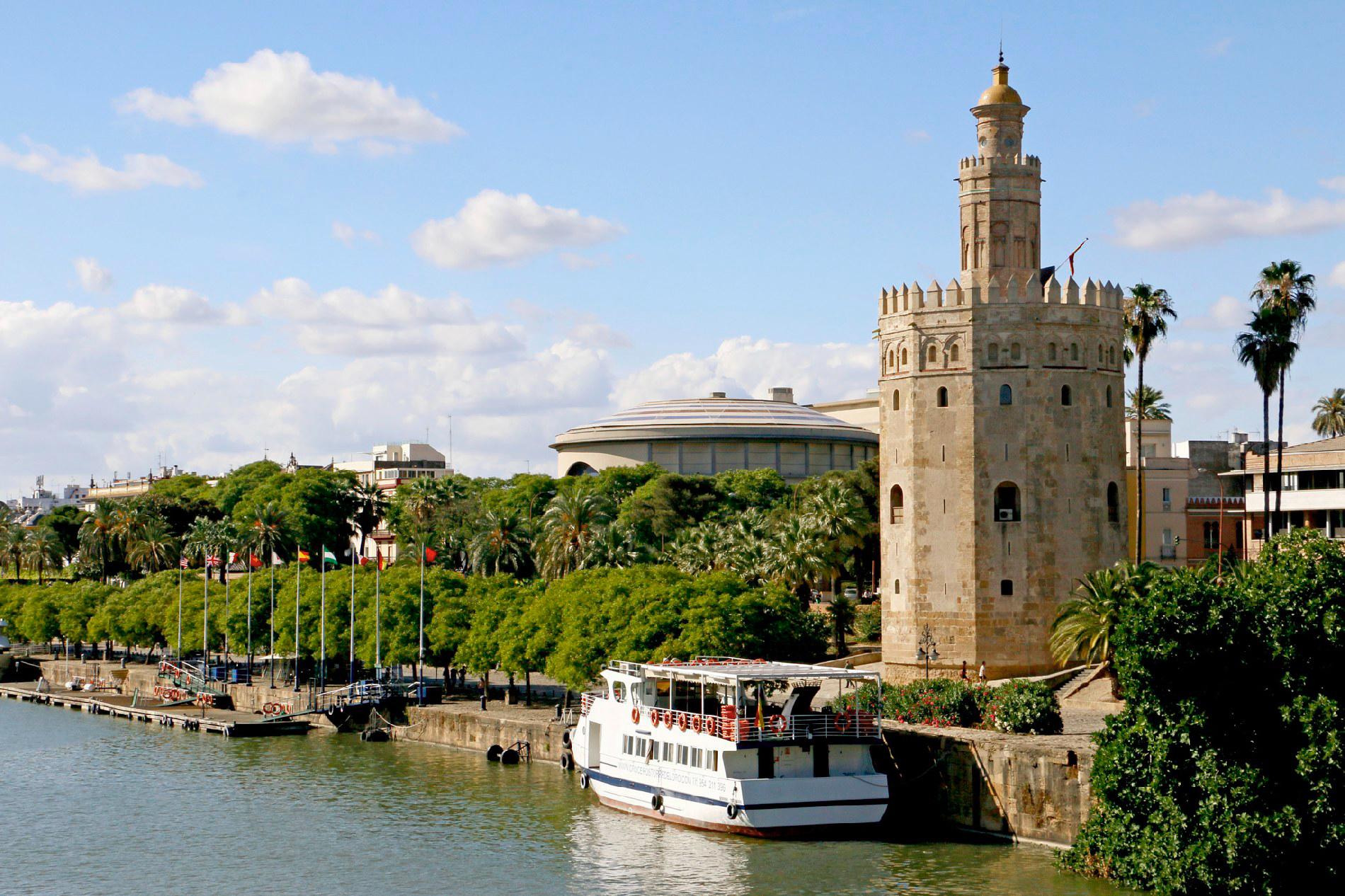
The Torre del Oro, the Sevillian symbol

On the left bank of the Guadalquivir, next to the Maestranza bullring, stands the Torre del Oro giving its golden reflections to the river since the 13th century. Originally a defensive watchtower that the Almohad governor of Seville Abù l-Ulà ordered to be built in 1220, it was one of the last constructions erected in the Muslim Isbiliya. In 1248, the troops of King Ferdinand III of Castile would take the city for the Christians. A thousand curious stories, legends and hoaxes have circulated about this elegant dodecagonal tower: the first, that of its own construction, which spans five centuries and reflects three different eras in the history of Sevilla.

We know that the Tower of Gold has been known this way since Arab times for its characteristic golden gleams – possibly its name then was Bury al-dahab – but we have not known for sure why until very recently. It was in 2005, during restoration works, that scientists discovered that the glosses are due to a mixture of lime mortar and pressed straw. Thus ended centuries of myths that attributed the name to a supposed tile roof that reflected the sun’s rays or to gold and silver treasures that King Pedro I kept in the tower.

Another of the false legends about the tower states that from its basement crossed the river to the other bank a thick chain destined to cut off the path of enemy ships. The truth of the case is that in Almohad times there was an aquatic walkway, formed by several ships linked by a chain, thus connecting the city with Triana. It was that chain that in 1248 destroyed the Castilian fleet of Admiral Ramón de Bonifaz, who ascended the Guadalquivir in the middle of the siege of the city. Because there are many of those Asturian and Cantabrian sailors, the feat has been immortalized in the coat of arms of Cantabria and in those of towns such as Avilés, Santander or Castro Urdiales.

How could it be otherwise, such a picturesque building could not have had a single use throughout history. After the Christian conquest of Seville, the tower lost its defensive function to be used as a chapel dedicated to San Isidoro de Sevilla, former archbishop of the city. In subsequent centuries, the old watchtower has also served as a prison for members of the nobility, a gunpowder store, and offices for the Harbor Master and Naval Command. Legend also says that King Pedro I took the maidens he courted to the Torre del Oro. The best known in Seville is Doña Aldonza, who is said to have lived in the tower.

The watchtower was declared a historical-artistic monument in 1931 and has been restored several times during the 20th century, partly thanks to the work of the Navy. Since 1944 it houses the Maritime Museum, for which 400 pieces were brought from the Naval Museum of Madrid. On its two floors, the center brings together various nautical instruments, models of historic ships, navigation charts and documents that review the history of the Spanish Navy, as well as Magellan’s world tour. The copy of Johannes Janssonius’s engraving of Seville from 1617 is very curious, in which you can see the walled city and the Torre del Oro before its last addition in the 18th century. Its panoramic terrace with magnificent views of Seville and the mythical reflections of the tower in the Guadalquivir river