Laura

/Laura
­

About Laura

This author has not yet filled in any details.
So far Laura has created 55 blog entries.

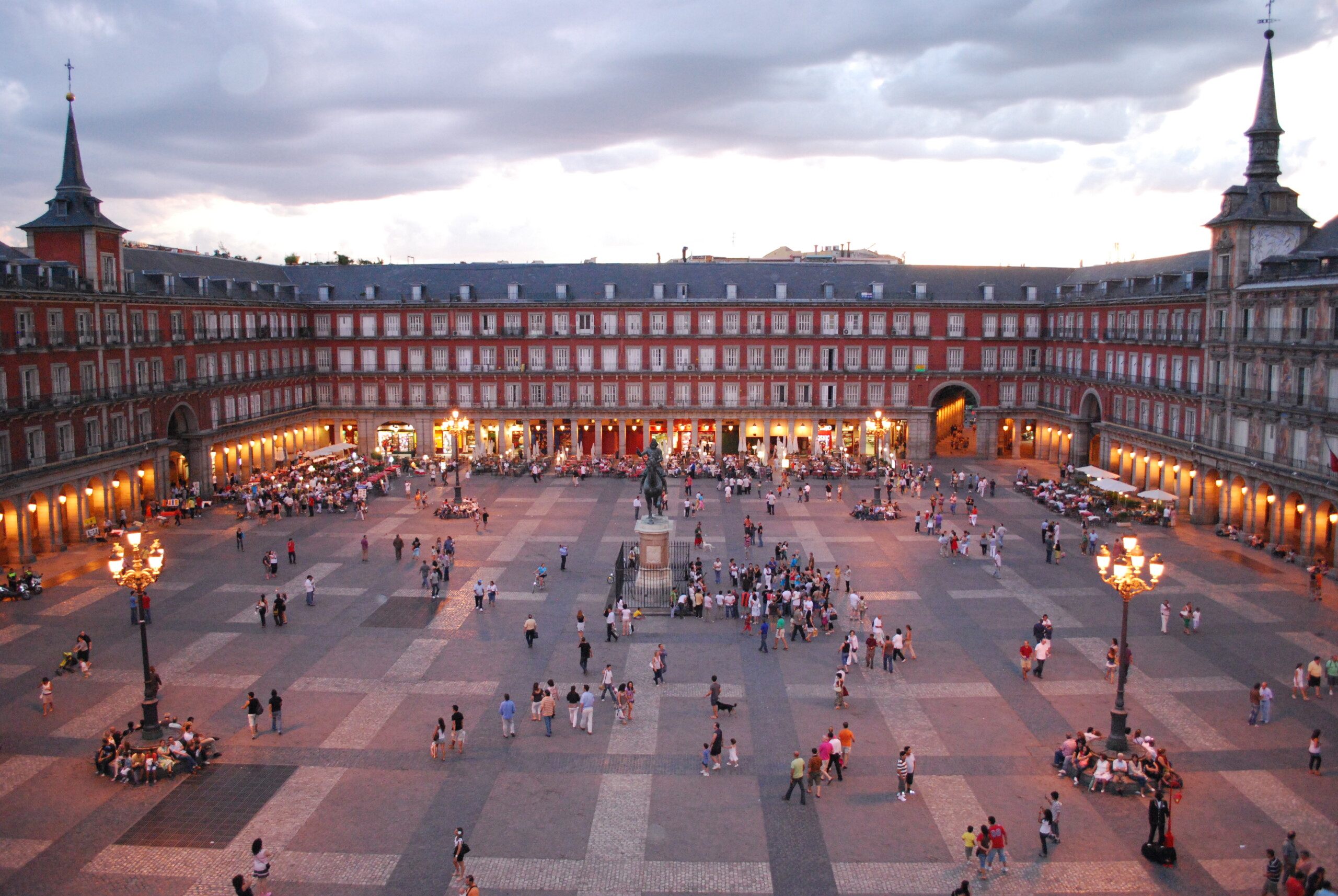
The Plaza Mayor in Madrid. A square with a lot of history

The Plaza Mayor is located in the heart of Madrid, a few meters from the Puerta del Sol and the Royal Palace.
It was designed by Juan de Herrera and Juan Gómez de Mora in the Baroque style and is one of the essential visits in Madrid.
Madrid’s Plaza Mayor is 129 meters long by 94 meters wide and is surrounded by arcades and three-story brick buildings.
Throughout the history of Madrid, the Plaza Mayor has been a place for meetings, announcements and celebrations of a civil nature.
In addition, it is loaded with commemorative plaques, historical places and other symbols of great value.
Several architects intervened in the construction of the square, among them Juan de Herrera and Juan Gómez de Mora, who were the true promoters of the project.
With the passage of time and the different fires suffered, the Plaza Mayor has been rebuilt and renovated on several occasions throughout history.
To get to the Plaza Mayor, you can use the different access doors that surround the square, each with a special charm.
In the 15th century, the Plaza Mayor received the name of Plaza del Arrabal, which was replaced by other names such as: Plaza de la Constitución, Plaza Real and Plaza de la República.
The current name has been preserved since the end of the Civil War.
In the Plaza Mayor we can find three places of special interest:
Statue of Felipe III: created in 1616 by Juan de Bolonia and Pietro Tacca, it was a gift from the Duke of Florence to the Spanish king. Until the middle of the 19th century he was in the Casa de Campo.
Casa de la Panadería: it is the most important building and it was the first to begin construction in 1590.
Initially it was the most important bakery in Madrid. The facade is decorated by Carlos Franco.
Arco de Cuchilleros: this arch forms the best known of the nine access gates that the Plaza Mayor has. The name comes from the street with which it communicates, Calle Cuchilleros.
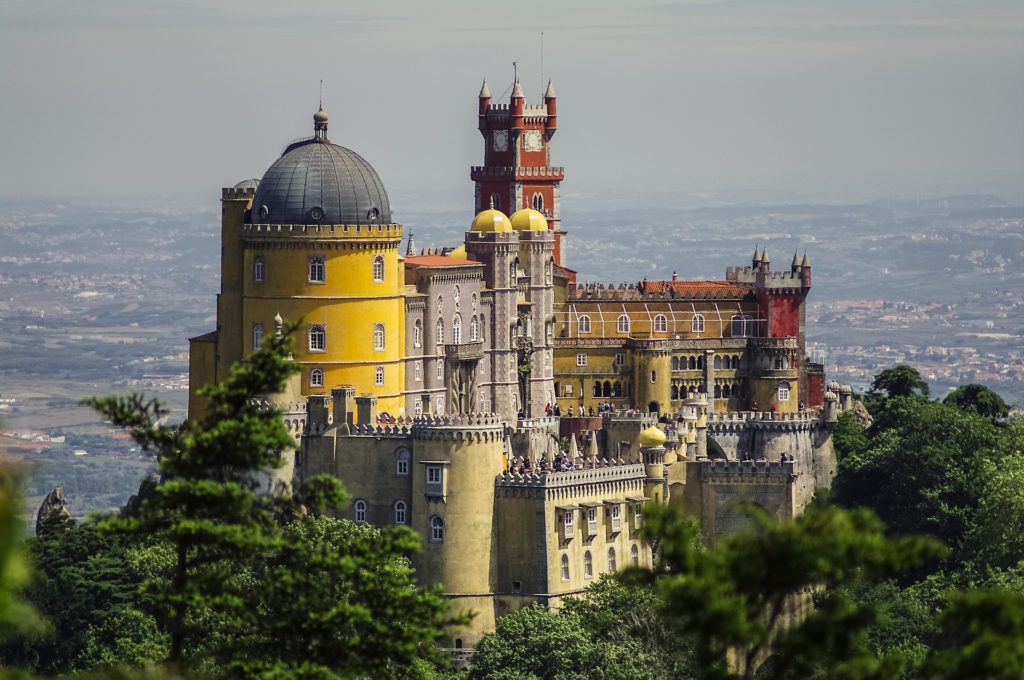
 

Palacio da Pena and its gardens, the best of Sintra (Portugal)

The Palacio da Pena is a jewel of 19th century Portuguese romanticism, a colorful mix of architectural and decorative styles that stands in the Sintra mountains, a few minutes from Lisbon.
The diversity of palaces, castles and fortresses that we can find in Portugal is overwhelming, but if there is one that stands out above all the others, even for its location and its striking color, that is undoubtedly the Palacio da Pena, in Sintra. This palace, ordered to be built by King Ferdinand II in 1836, impresses both outside and inside and its historical richness made it a UNESCO World Heritage Site in 1995 along with the cultural landscape of Sintra.
An experience with which to discover this architectural wonder that is well worth a visit in person as soon as possible.
The mix of styles is tremendous, you will see Neo-Gothic, Neo-Manueline, Neo-Islamic and Neo-Renaissance, and it is that everything exotic fascinated the minds closest to the German-influenced romanticism of the time. The old cells of the friars were converted into large rooms with spectacular vaults, and in 1843 the king decided to expand it by adding a New Palace with even larger rooms. In fact, the striking colors of the complex allow the two constructions to be differentiated: old pink for the Old Palace and ocher for the New Palace.
If the rich interior decoration of each of its rooms seems to exceed your expectations, the Parque de la Pena should not be overlooked, since its landscaping was as important as the palace itself. With trees and plants from all over the world, with winding paths and stone benches where you can rest in the middle of nature, a complex is completed that was rightly declared a Portuguese National Monument in 1910.

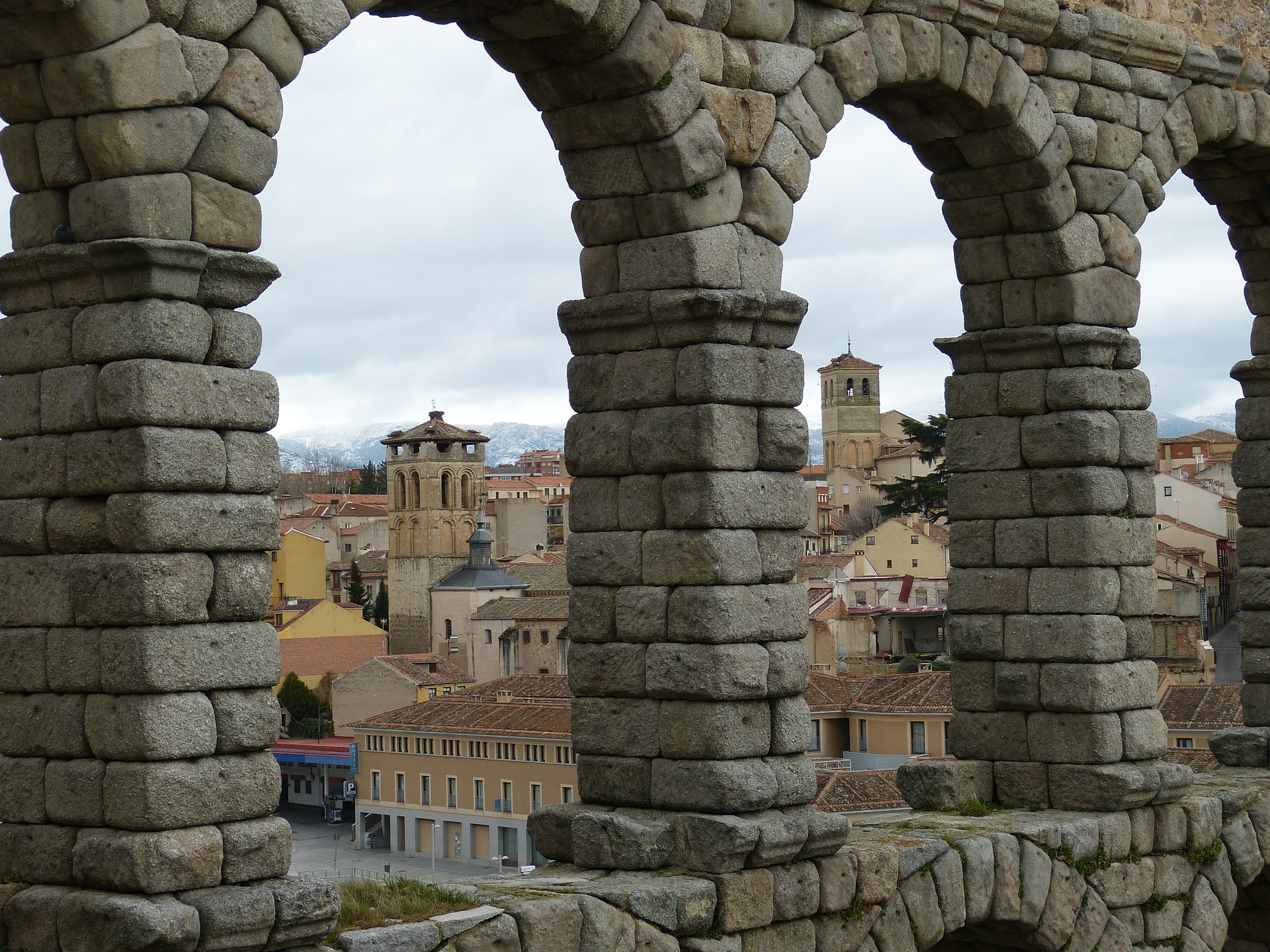
Segovia and its aqueduct

At the confluence of the Eresma and Clamores rivers, protected by the imposing silhouette of the Sierra de Guadarrama, is one of the most visited cities in Spain. And there are so many things to see in Segovia that it is well worth a visit.
Segovia is a small and pleasant city, whose historic center has been declared, together with its mythical Roman aqueduct, a World Heritage Site by UNESCO. In it you can perfectly appreciate the cultural and patrimonial legacy left by the coexistence of Muslims, Jews and Christians.
We have been lucky enough to visit it and it has always seemed to us one of those cities that create the feeling of traveling through time. Such is the medieval beauty that it treasures.
In addition, you breathe clean air and eat luxuriously. What more can you ask for from a destination?
High-speed trains depart from Madrid to Segovia. So it’s easy to get there.
Without a doubt, the best place to see in Segovia is its aqueduct. This impressive work of Roman civil engineering was built at the beginning of the second century, at the end of the mandate of Emperor Trajan or the beginning of Hadrian, both emperors known for being one of the most powerful in the history of Rome and having been born in Hispania.
The Aqueduct of Segovia brought (until very recently) water from the Fuenfría spring – located about 17 kilometers from Segovia – to the city, supplying all its inhabitants. The most visited section, and photographed by tourists, is the one that passes through the Plaza del Azoguejo, where it saves the slope of the terrain with an arcade that leaves everyone who sees it for the first time with their mouths open. In its highest part it reaches 28 meters and has a total of 167 arches.
Really impressive.
Nothing is comparable to the sensation you experience when seeing it in front of you.
Another place you must visit in Segovia is The Alcazar:
Atop a crag and dominating the western part of Segovia, this celebrated palace has Roman and Moorish origins, but its Renaissance storybook appearance dates back to the reign of Philip II in the 16th century. Many Castilian kings lived in the Alcázar, such as the great Isabel la Católica, who inhabited it at the end of the 15th century.
A tour of the Alcázar of Segovia is absolutely essential to understand the history of the place.
From here, you can enjoy one of the best views to see in Segovia, with the entire center at your feet and the rugged mountains of Guadarrama to the southeast.
The cathedral is another must-see during a visit to Segovia.
After the destruction of the old cathedral of Segovia in the Revolt of the Communards of 1520, a new one was built on top of the old Jewish quarter, some distance from the Alcázar, where it would be out of danger.
Despite being built in the Renaissance, this magnificent building was erected in an Old Gothic style, making it one of the newest original Gothic structures in Europe.
A beautiful city where you can also enjoy some of the many tasty dishes that can be eaten in Segovia: such as the world famous Segovian roast suckling pig.

The Real Alcazar of Sevilla

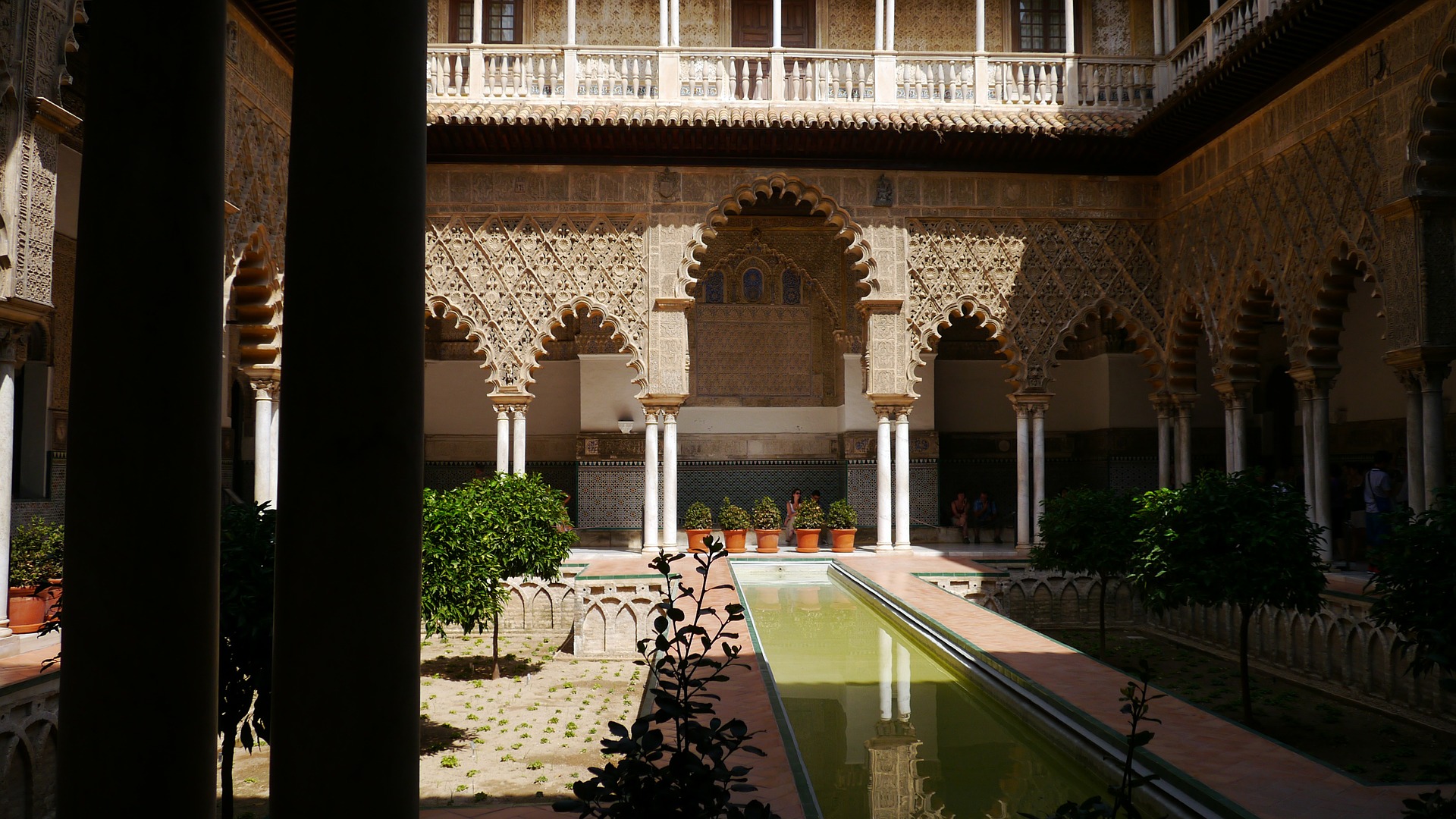
The Real Alcazar of Sevilla is a walled palace complex built in different historical stages.
The original palace was built in the High Middle Ages. Some vestiges of Islamic art are preserved and, from the period after the Castilian conquest, a Mudejar palatial space and another in the Gothic style. In later reforms, Renaissance, Mannerist1 and Baroque elements were added.
It is the residence of the members of the Spanish royal family when they visit Seville.
This makes it the oldest royal palace in use in Europe.
Unesco declared it a World Heritage Site, along with the Seville Cathedral and the Archivo de Indias, in 1987.
In 2019 it received 2,067,016 visitors, making it one of the most visited monuments in Spain.
Throughout history, the Alcazar has been the scene of various events related to the Spanish Crown. Between 1363 and 1365, as the seat of the Castilian court, it was visited by the diplomats of the Granada court Ibn Jaldun, philosopher, and Ibn al-Jatib, chronicler and poet, to sign a peace treaty with King Pedro.
In 1367 the Prince of Wales sent the English diplomats Neil Loring, Richard Punchardoun and Thomas Balastre to this Alcazar to meet Don Pedro and collect payments.
On July 28, 1477 the Catholic Monarchs arrived in Sevilla, using the enclosure as a room after ten years without a king set foot in the city. Queen Isabel I of Castile, observing the poor condition of the building, ordered interventions and measures for the material and functional recovery of the site.
A year later, on June 30, 1478, his second son, Prince John, was born in the palace.
It is known that this royal birth was assisted by a Sevillian midwife known as «la Herradera» and that it was attended, as witnesses appointed by King Fernando, of Garci Téllez, Alonso Melgarejo, Fernando de Abrejo and Juan de Pineda, as marked Castilian norms, to dispel the slightest doubt that the son was the queen’s.
In 1526 the wedding of Carlos I with his cousin Isabel of Portugal was celebrated in the Alcázar.
Between 1729 and 1733 the Court was established in the Alcazar of Sevilla. Felipe V, Isabel de Farnesio and the future Carlos III lived there.
In 1823, on the occasion of the military intervention of the Hundred Thousand Sons of San Luis, the royal family, headed by Fernando VII, resided in Seville for two months, during which the Alcázar served as their royal residence.
Coinciding with this royal stay, on April 17, 1823, the Infante Enrique de Borbón y Borbón-Dos Sicilias was born in the city, son of the Infante Francisco de Paula de Borbón and Luisa Carlota de Borbón-Dos Sicilias, and to whom the king Fernando VII granted him, a few days after his birth, the title of Duke of Seville.
By decree of April 22, 1931, the Government of the Second Spanish Republic, at the proposal of its Minister of Finance, Indalecio Prieto, ceded the Alcazar and its gardens to the municipality of Sevilla.
On April 2, 1976, during the Spanish Transition, a meeting of the Council of Ministers took place here, chaired by Juan Carlos I.
The Council of Ministers met again in the Alcazar on March 19, 2010, this time without the presence of the monarch.
The last event related to the monarchy was on March 18, 1995, when a lunch and reception was held on the occasion of the wedding of the Infanta Elena de Borbón, daughter of King Juan Carlos I, with Jaime de Marichalar.

Cordoba, the Jewish Quarter

The Jewish quarter of Cordoba is an area of the Spanish city of Cordoba that was, between the 13th and 15th centuries, the neighborhood in which the Jews lived.
The area that is currently known by that name is located northwest of the Mosque-Cathedral.
It is part of the historic center of Córdoba that was declared a World Heritage Site by Unesco in 1994.
It is one of the most visited areas by tourists since, in addition to the Mosque-Cathedral, you can see monuments such as the Synagogue, the Municipal Souk or the Mudejar Chapel of San Bartolomé, as well as museums such as the Casa de Sefarad.
Although there is evidence that there was a Jewish presence in Córdoba since Roman times, the Jewish quarter of Córdoba has not always been located in the same place.
In fact, after the Muslim invasion, the Jews were expelled outside the walls, mainly in the north, between the gardens of La Merced and the church of Santa Marina.
The only Jewish tombstone found in the city, referring to Yehudá bar Akon, dated in the year 845, was found from this time in the neighborhood of Zumbacón; as well as the funerary square inside the church of San Miguel, which show the presence of a Jewish necropolis in the area.
The destruction of this first Jewish quarter came after the fall of the Cordovan Caliphate and the sacking of the city at the hands of Suleiman in 1013, for which many Hebrew families were forced into exile. However, the definitive repression and annihilation took place with the arrival of the Almohads in 1148, Berber radicals from North Africa, who prohibited the Jewish presence in the region.
After Fernando III recovered the city during the conquest of Córdoba in 1236, the Jews returned to settle there, while his son Alfonso X the Wise closed and delimited the Jewish quarter in 1272, in the northwestern area of the Mosque-cathedral , as it is currently known.
In 1315 what is probably the most representative building of the Jewish quarter was built: the Synagogue of Cordoba, made by the architect Isaac Moheb.
Cordoba lived a splendorous time when three peoples (Christian, Jewish and Muslim) with their corresponding religions coexisted, although not peacefully since the expeditions of punishment of the emirs and caliphs towards the suburbs where the non-Muslim population was located were periodic.
In the street of the Jews we now find a bronze statue dedicated to Maimonides, the great Jewish philosopher and doctor from Cordoba, whose family was forced to convert to Islam and in the end he himself had to leave the city during the Almohad persecution.
During the 10th century, Cordoba was, after Byzantium, the largest economic and cultural center in Europe, and although the Muslim, Jewish and Christian population coexisted in the city, this coexistence was far from peaceful.

Chefchaouen, the blue city

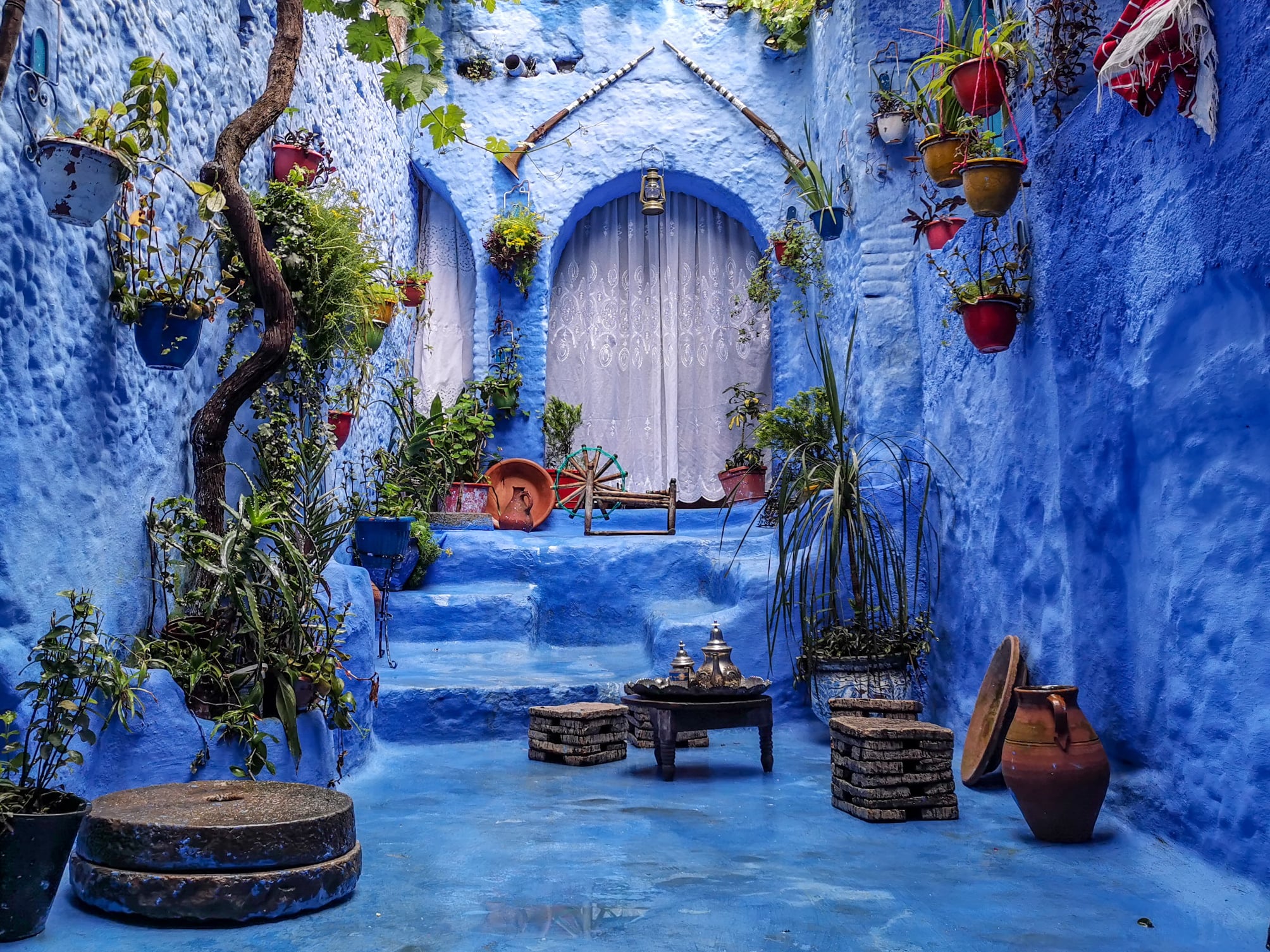
Chefchaouen in  Morocco is often called the blue city or the blue pearl.
In the north of Morocco, in one of the most beautiful places in the Rif mountains, this city of narrow streets and houses painted white and blue emerges. Indigo stains the streets of the medina of the city of Chefchaouen.
The city was founded in 1471 on the site of a small Berber population. Its original population consisted mainly of exiles from Al-Andalus, both Muslims and Jews, which is why the old part of the city has an appearance very similar to that of the Andalusian towns, with small streets of irregular layout and whitewashed houses.
The city was founded as a small kasbah (fortress) by Moulay Ali ibn Rashid al-Alami, a descendant of Abd as-Salam al-Alami and Idris I, and through them, of the Islamic prophet Muhammad. Al-Alami founded the city to fight the Portuguese invasions of northern Morocco.
Along with the Ghomara tribes of the region, many Moriscos and Jews settled here after the Spanish Reconquista in medieval times.
After eight years of the creation of the Spanish Protectorate in Morocco the Spanish Army could effectively take Chaouen, when General Dámaso Berenguer occupied the city on 14 October 1920.
Following the 1924 retreat of the Spanish army from the city  Chaouen was part of the Republic of the Rif (led by Abd el-Krim el-Khattabi) from 1924 to 1926.
In September 1925, in the middle of the Rif War, a rogue squadron of American volunteer pilots, including veterans of World War I, bombarded civilians in Chaouen.
Colonel Charles Sweeney had proposed the idea to French Prime Minister Paul Painlevé, who «warmly welcomed the Colonel’s request.
After al-Khattabi was defeated with the help of the French, he was deported to Réunion. The Spanish Army retook the city in 1926.
The city’s oldest and historically most important mosque is the Great Mosque located at Place Uta Hammam at the heart of the medina.
On a hill overlooking the town to the east there is also a disaffected mosque built by the Spanish in the 1920s, now a popular lookout point.
Also of great historical and religious importance to the city is the mausoleum dedicated to the patron saint of northern Morocco’s Jebalah region, Moulay Abdessalam Ben Mshish al-Alami. His tomb and the village surrounding it is roughly 50 kilometers northwest of from Chefchaouen on the old road to Larache.

Chefchaouen – or Chaouen, as it is often called by Moroccans – is a popular tourist destination because of its proximity to Tangier and the Spanish enclave of Ceuta.
The beauty of Chefchaouen’s mountainous surroundings are enhanced by the contrast of the brightly painted medina (old town). The main square in the medina is lined with cafes and filled to the brim with locals and tourist mingling easily.
Chefchaouen is a popular shopping destination as well, as it offers many native handicrafts that are not available elsewhere in Morocco, such as wool garments and woven blankets. The goat cheese native to the area is also popular with tourists.

Málaga. Ronda

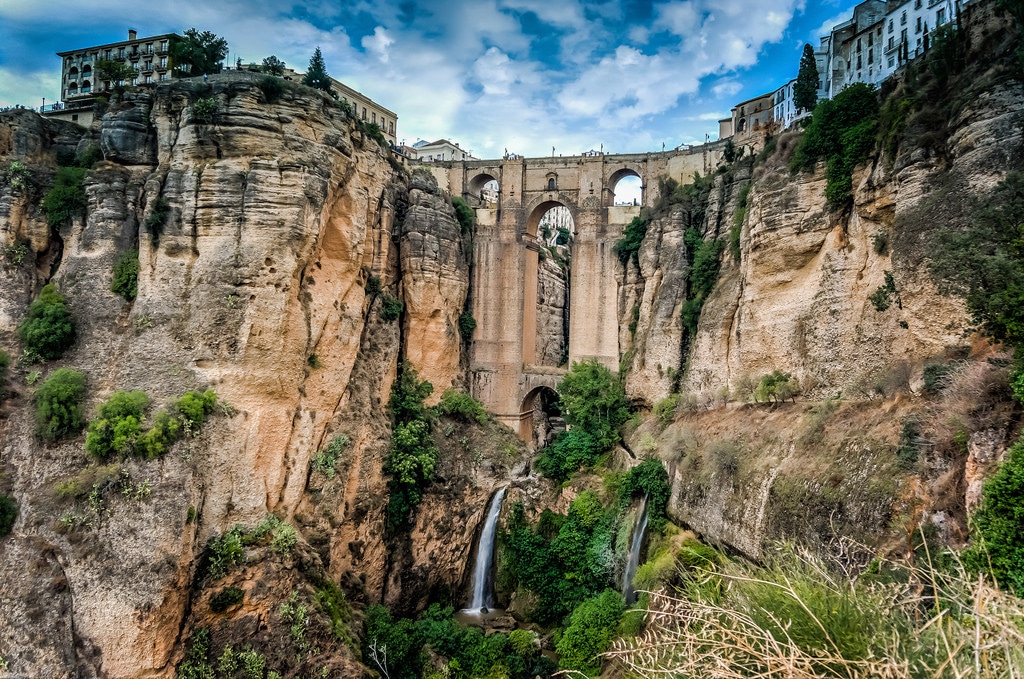
Ronda is a magical little town balanced on the edge of an escarpment in the Málaga province.
One of the most impressive sights in Spain
Visit a have a chance to take a picture of the Puente Nuevo, an 18th-century structure that spans the 120-metre-deep El Tajo Gorge between the citadel and newer part of the town..

Within the old citadel there are lots of intriguing fragments of Ronda’s 700-year occupation by the Moors to be discovered,
Ronda is also the Costa del Sol’s top wine town, with more than 20 wineries open for visitors in the local countryside. A must during tour culinary trip through Spain

Discover with us! : info@eurospaintravel.com

Burgos. Cathedral

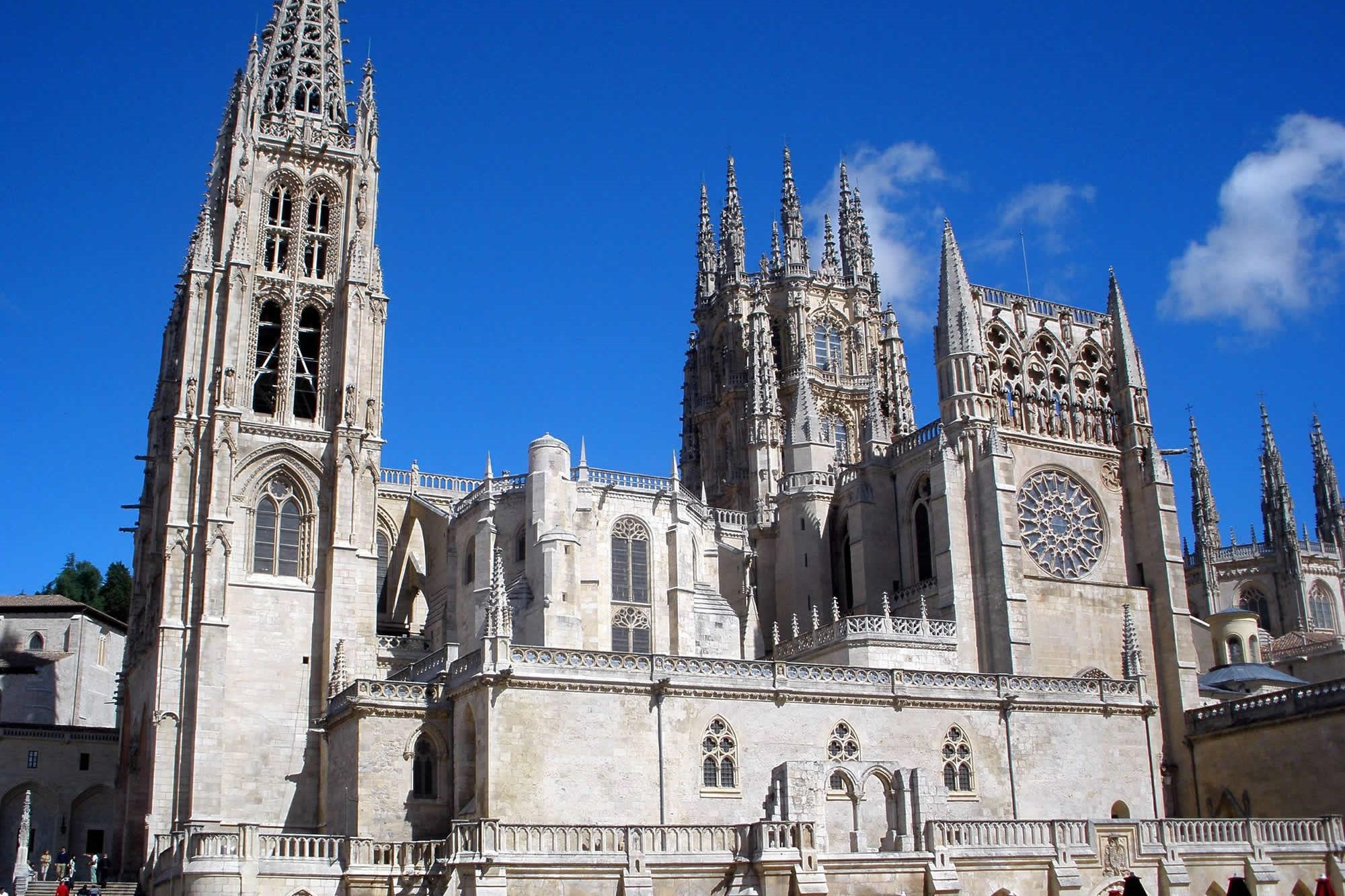
The Cathedral of Saint Mary of Burgos (Santa Iglesia Basílica Catedral Metropolitana de Santa María de Burgos) is a Catholic church dedicated to the Virgin Mary located in the historical center of the Spanish city of Burgos. Its official name is Santa Iglesia Catedral Basílica Metropolitana de Santa María de Burgos.

Its construction began in 1221, in the style of French Gothic architecture and is based on a Latin Cross.
The design of the main facade is related to the purest French Gothic style such as found in the contemporary great cathedrals of Paris and Reims, while the interior elevation refers to Bourges Cathedral.

The cathedral was declared a World Heritage Site by UNESCO on October 31, 1984. It is the only Spanish cathedral that has this distinction independently, without being joined to the historic center of a city (as in Salamanca, Santiago de Compostela, Ávila, Córdoba, Toledo, Alcalá de Henares or Cuenca) or in union with other buildings, as in Seville. It is similar in design to Brussels Cathedral.

Discover with us: info@eurospaintravel.com

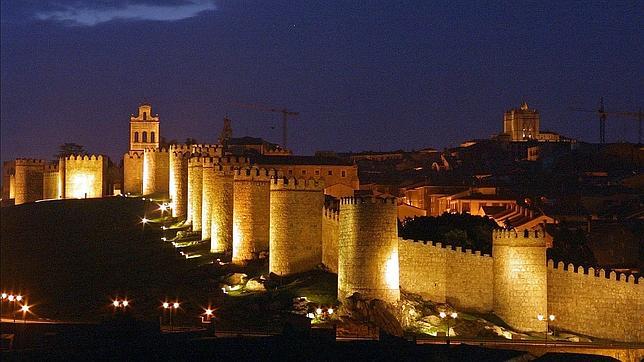
The Wall of Avila

The city of Ávila strips its charms before the eyes of the curious on May 10 and 11. Two days a year, the wall hosts open days, a unique opportunity to enjoy the most emblematic monuments of the city. The wall of Ávila is the only one that he knows convincingly since his perpetual embrace shelters the capital of Avila. The beginning and end of its construction continues to create controversy among historians. The date popularly accepted specifically points to May 3, 1090 as the beginning of the works of the emblem of the capital of Avila and marks its end nine years later, in 1099.
The city is a National Historic-Artistic Complex since 1884 and is included in the list of World Heritage Sites of UNESCO since 1985. City of height, Ávila rises to 1,182 meters, on a rocky promontory, a privileged observer of the riverside. River Adaja, tributary of the Duero. It is the highest provincial capital of Spain, and the fourth largest city in Europe in this sense.

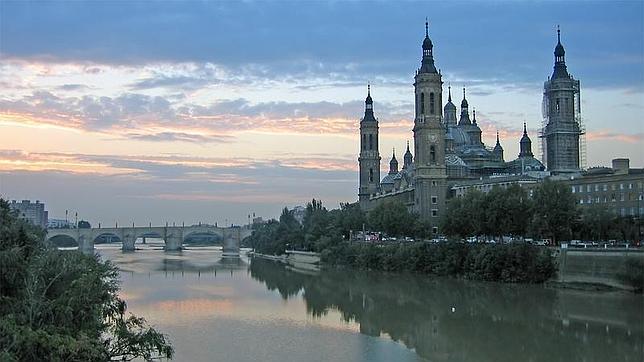
Zaragoza

Cradle of illustrious geniuses such as Goya and a crossroads of roads and cultures on the banks of the Ebro, Zaragoza is a city with character that has managed to create its own personality.
The Alfajería de Zaragoza was the residence of the Hudi kings and later, it was not only Christianized but inhabited by the Catholic Monarchs. Today it is the seat of the Cortes de Aragón and still reflects the splendor of the Taifa kingdom.
But if there is something that undeniably marks the profile of Zaragoza is its Basilica del Pilar. This baroque temple to which many pilgrims congregate, gathers one of the most remarkable artistic collections in Spain, such as the frescoes by Goya, located in the vault of the Coreto and the dome of Regina Martyrium, the main altarpiece (from the 16th century), the choir mayor, the organ and its museum.