Laura

/Laura
­

About Laura

This author has not yet filled in any details.
So far Laura has created 55 blog entries.

Cudillero, the small municipality on the coast of Asturias.

Cudillero, one of the most beautiful and visited towns in Asturias, Spain.
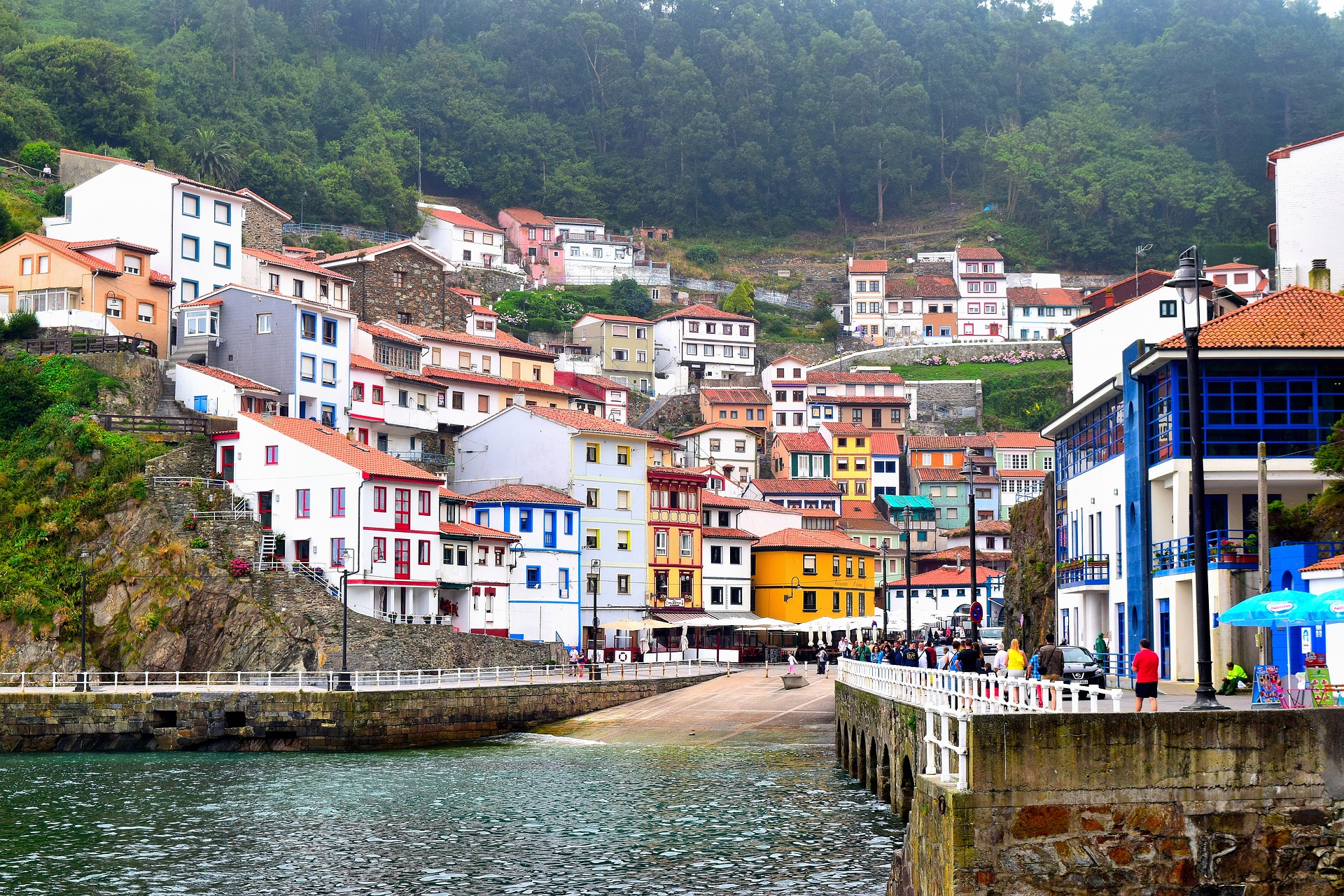
Just 60 kilometers from Oviedo stands Cudillero, one of the most picturesque (and most beautiful) towns on the Asturian coast.
Cudillero falls in love, at first sight. It will be because it is sculpted between the land and the sea, with that network of small houses with reddish roofs that hang down the hillside and end up in a picturesque port.
It has an incredible landscape, with unique beaches, green valleys, rivers, waterfalls and vertiginous cliffs.
It is a picturesque fishing village – declared a Historic Artistic Site – in which the houses hang from the mountain wearing bright colors.

An unforgettable town where the fishing environment is still alive and where gastronomy and landscape come together to form a unique picture.
The council of Cudillero has 38 kilometers of coastline. A rugged and wild coast ideal for lovers of photography.

Cudillero, an incredible place that you will not forget!!
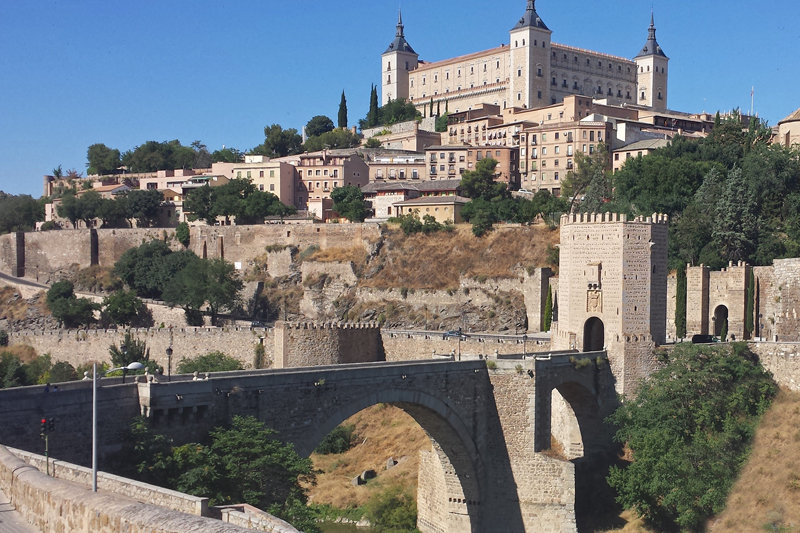
Alcantara Bridge in Toledo

The Alcantara Bridge was part of the defensive enclosure of the city of Toledo.
The Alcantara bridge (from the Arabic al-qanţaratu, «bridge») rises over the Tagus River, in the Spanish city of Toledo.
Of presumably Roman origin, it was cited as early as 788 and was built as a confluence of roads that seek the passage to the city from the east, crossing the Tagus River.
It currently has two arches, located at the foot of the castle of San Servando and next to the Puerta de Alcantara, there is evidence of its construction in Roman times, at the foundation of Toletum. It was badly damaged and rebuilt in the 10th century. It is when the third arch disappears, reduced to a porthole with a horseshoe arch. It was one of the bridges that gave entry to the city and in the Middle Ages it was a mandatory entry for all pilgrims.
Under the reign of Alfonso X it suffered serious damage and was rebuilt. The western tower belongs to this last period, later modified and decorated under the reign of the Catholic Monarchs, whose arms decorate its walls.
It was declared a national monument in 1921.

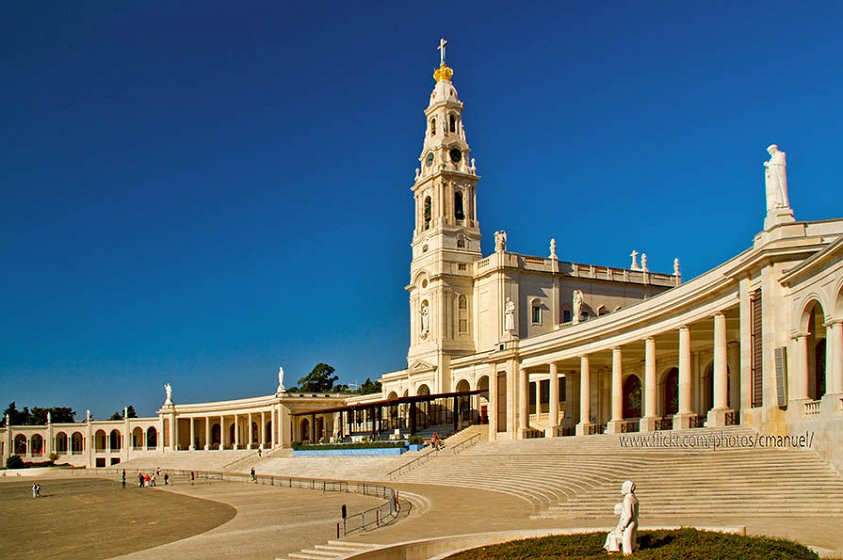
Portugal. The Shrine of Fatima

Fatima is a Portuguese parish of the Ourém council in the Sierra de Aire.
The population belongs to the province of Beira Litoral, in the district of Santarém and in the Central region of Portugal, sub-region of Medio Tajo. Its worldwide fame is due to the apparitions of the Blessed Virgin Mary in the Cova da Iria reported by three little shepherds from May 13 to October 13, 1917.
At the ecclesiastical level, the city of Fatima is simultaneously the seat of dioceses with the city of Leiría. The name of the then renowned diocese of Leiría-Fátima was attributed by Pope John Paul II on May 13, 1984.
Due to the Sanctuary of Our Lady of Fatima, as well as the construction of many Catholic monasteries and convents, the city has become one of the most important international destinations for religious tourism, receiving about six million people a year.

The town owes its name to the ancient occupation of the Muslims in that territory, since «Fatima» was the name of Muhammad’s favorite daughter.

The history of the city of Fatima is, above all, more associated with the phenomenon of the apparitions of the Virgin Mary. In the first place, around the year 1758, Our Lady appeared to a little shepherd girl (in the place where the Shrine of Our Lady of the Nettle stands today), and later, already in the 20th century, to three other children (known as «The Three Little Shepherds»). Lucía dos Santos and her cousins, Francisco and Jacinta Marto, on May 13, 1917, while they were pasturing their sheep in the Cova da Iria (Iria Cave), witnessed the appearance of a beautiful Lady dressed in white.

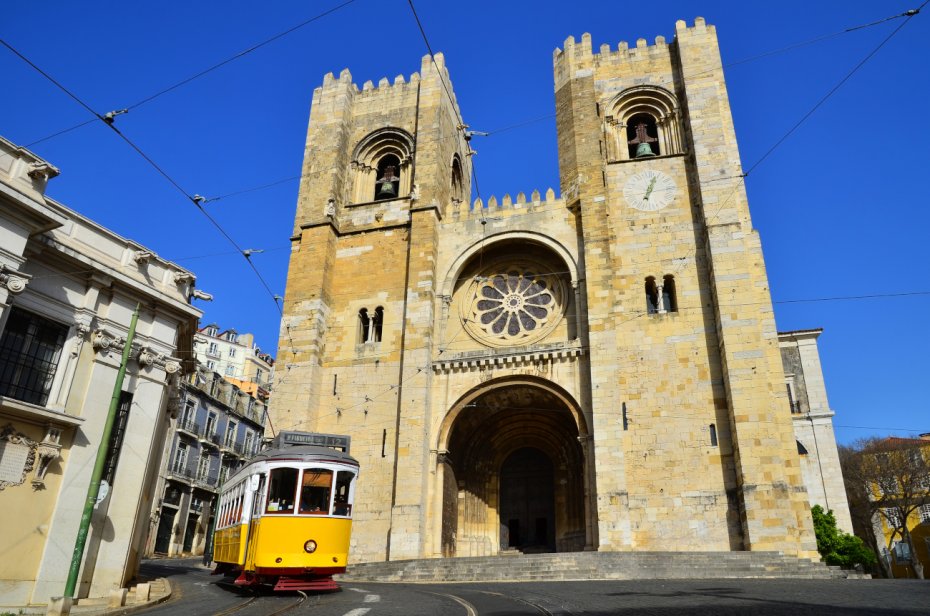
Lisbon Cathedral

Santa Maria Maior de Lisboa or Sé de Lisboa is Lisbon’s cathedral and oldest church in the city.
Since the beginning of construction in 1147, the building has been modified several times and has survived several earthquakes. Currently it is the result of a mixture of different architectural styles.
Romanesque in style, it is one of the must-sees in the Alfama neighborhood. It is one of the few surviving monuments to the successive earthquakes and fires that have devastated the city.
Its construction began in the mid-12th century, when Alfonso Henríquez and the first bishop of Lisbon, Gilbert de Hastings, decided to build it over an old mosque after reconquering the city from the Muslims during the Second Crusade.
From the outside, the cathedral is protected by thick walls framed by two towers like bell towers, which give it an aspect more typical of medieval fortresses than of a temple.
It also houses a very precious treasure: the remains of Saint Vincent, patron saint of the city, whose coffin, according to legend, was accompanied by two crows in their transfer to the city (hence their incorporation to the coat of arms of Lisbon).

Lisbon Cathedral, as we can see it today, is the product of a deep restoration dating from the early twentieth century.

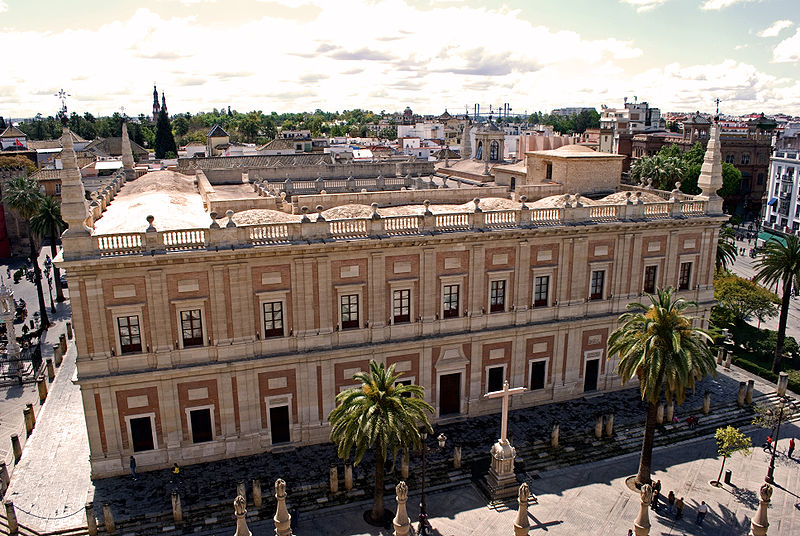
The General Archive of the Indies of Sevilla

The General Archive of the Indies of Sevilla is one of the emblematic buildings of the city, a reminder of its glorious past as a gateway to trade with the Indies and today an absolute reference in the study of the Spanish presence in America.
The Merchants of America, in the 16th century, used the steps of the Cathedral for their transactions. The Cathedral Chapter, to avoid the excesses committed by merchants, who sometimes used the temple for their business, installed chains and surveillance in the vicinity of the Cathedral.
King Felipe II decided in 1584 to build a building to house the Lonja, which would take place on the same avenue, next to the Cathedral.
It would also be the headquarters of the Casa de Contratación, from 1598, which was in the Alcázar, until its transfer to Cádiz in 1717.
The Indies Archive of Sevilla was created in 1785 by the hand of King Carlos III, with the aim of centralizing in a single place the documentation referring to the administration of the Spanish colonies until then dispersed in various archives: Simancas, Cádiz and Sevilla.
Since then and in different remittances, the funds of the main institutions related to the Indies have been incorporated until the archive becomes the main documentary deposit for the study of the Spanish administration in the New World and the Philippines.
It is the largest existing archive on the activity of Spain in America and the Philippines, containing information on the history and geography of those territories.
The Archive keeps a large number of pieces of incalculable historical value: autograph texts of Cristóbal Colón, Fernando de Magallanes, Vasco Núñez de Balboa, Hernán Cortés or Francisco Pizarro.
Currently the Archive is one of the general archives (together with the Crown of Aragon and Simancas) belonging to the Spanish State.
In 1987 it was declared a World Heritage Site by UNESCO along with the Cathedral, the Giralda and the Reales Alcázares de Sevilla

Spain: the best way to discover a country is through its gastronomy.

The wealth and gastronomic quality of Spain is well known.
When talking about Spanish gastronomy, we cannot talk about a set of dishes, a unique way of cooking or a basic ingredient, but rather a huge variety of all of it.
However, the country presents, from end to end, an unparalleled variety. The dishes of the North have nothing to do with those of the South or the Center.
Obviously, the Mediterranean makes olive oil the base of many dishes in the Spanish cookbook, but from there, each region has developed its own gastronomy, giving rise to unique and high-quality specialties.
In addition, the gastronomy of Spain has absorbed the influences of other international gastronomies, enriching and varying its traditional dishes.
Traveling around the country thus becomes an opportunity not only to discover new places but also to discover new gastronomies and, through it, learn more about the towns and culture of the place.
The gastronomic variety of Spain is as wide as its cultural variety.
We design gastronomic trips around Spain.
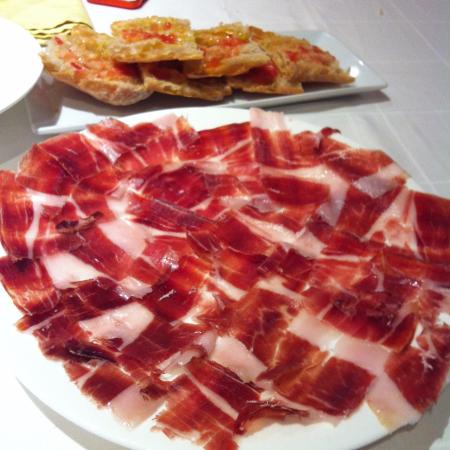
For foodies and lovers of cuisine, we suggest you savor Spain through our gastronomic experiences, stroll through the lands of the prestigious Iberian Ham, carry out olive oil tastings in Andalusia, visit the most important wine regions such as La Rioja, Ribera de Duero or Priorat.
Taste the best seafood in Galicia or have tapas in Madrid and San Sebastián.
Discover with our Experiences and gastronomic routes through Spain, with the help of our best Chefs, the most traditional Spanish gastronomy.
Gourmet walking tours, Tapas tasting, Pintxos tour, cooking classes….everything adds an unforgettable experience to your trip.

The Plaza de España – Heritage of Sevilla

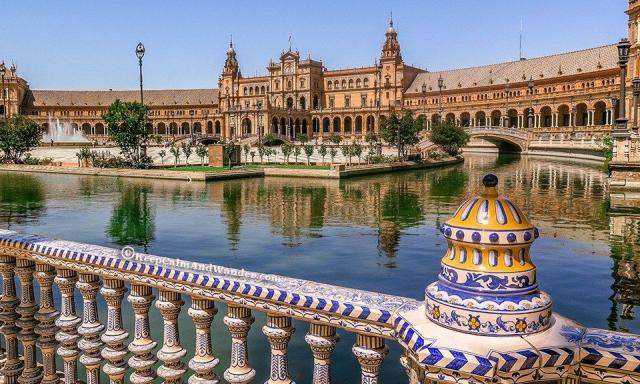
The Plaza de España is an architectural complex located in the María Luisa park in the city of Sevilla (Spain).
It was designed by the architect Aníbal González. It was built between 1914 and 1929 as one of the main constructions of the Ibero-American Exposition of 1929.
It constitutes the largest building of all those that were erected in the city during the 20th century, comparable to the other two outstanding historical constructions outside the walls of the city, which are the Hospital de las Cinco Llagas (16th century) and the Royal Tobacco Factory (18th century).
The square has large dimensions (170 meters in diameter) and a semi-elliptical shape, which symbolizes the embrace of Spain to its former American territories, and looks towards the Guadalquivir river, as the way forward to America.
Its total area is approximately 50,000 square meters, of which 19,000 are built and the remaining 31,000 are free space.
It is bordered by a channel that runs for 515 m and is crossed by four bridges.
The buildings that surround the square are structured in a central building, wings with intermediate buildings that compensate for an excessive length and towers at the ends.
The construction is made of exposed brick and has extensive ceramic decoration.
The ceilings of the gallery in the square have wooden coffered ceilings that are supported by marble columns. The backs of the benches and some lampposts are made of wrought iron.
The medallions with effigies of famous Spaniards, the marble columns and the coffered ceilings give the whole a Renaissance atmosphere.
According to the writings of Aníbal González, his inspiration for designing the square had been the Spanish Renaissance, with the Sevillian architect providing it with new modern elements.
The two towers that flank the square, which provide a Baroque-style atmosphere, are 74 meters high.
The central fountain, the work of Vicente Traver, has been highly questioned because it breaks the emptiness of the square. The canal it contains is crossed by 4 bridges that represent the 4 ancient kingdoms of Spain (León, Castilla, Aragon and Navarra).

On the walls of the square there is a series of 48 benches that represent, in alphabetical order, forty-six peninsular Spanish provinces (all except Seville) and the two archipelagos (Canary Islands and Balearic Islands), with their shield, a map and a cloth Pisan tile with outstanding historical facts of that territory.

The archaeological site of Madinat al-Zahra

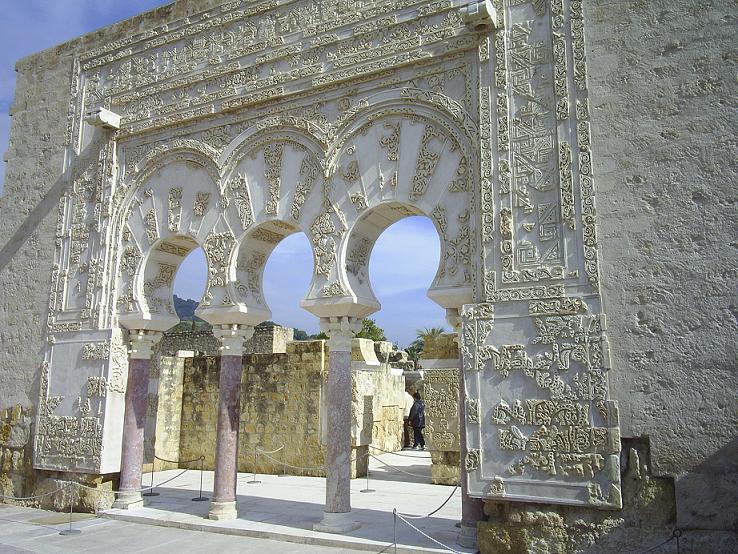
Medina Azahara, Madīnat al-Zahrā («the Bright City»), was a palatine or aulic city that the first caliph of Córdoba, Abderramán III, ordered to build, about 8 km outside Córdoba in a northwesterly direction, at the foot of from Sierra Morena.
The archaeological site of Medina Azahara has been declared a Site of Cultural Interest in the Monument category since 1923.
In addition to being officially declared a UNESCO World Heritage Site on July 1, 2018.
The main reasons for its construction are of a political-ideological nature: the dignity of caliph requires the founding of a new city, a symbol of his power, in imitation of other eastern caliphates and above all, to show his superiority over his great enemies, the newly established Fatimid Caliphate of Ifriqiya, the northern part of the African continent.
In addition to being political opponents, they were also religiously opponents, since the Fatimids, Shiites, were enemies of the Umayyads, mostly from the Sunni Islamic branch.
It is located about 8 kilometers west of Córdoba, in the last foothills of the Sierra Morena, on the slope of the Yabal al-Arus, in front of the Guadalquivir valley and oriented from north to south, on a spur of the mountains, between two ravines , which goes into the countryside that is Medina Azahara or Madínat al-Zahra. It has been described as the Versailles of the Middle Ages.


Girona:The historic city

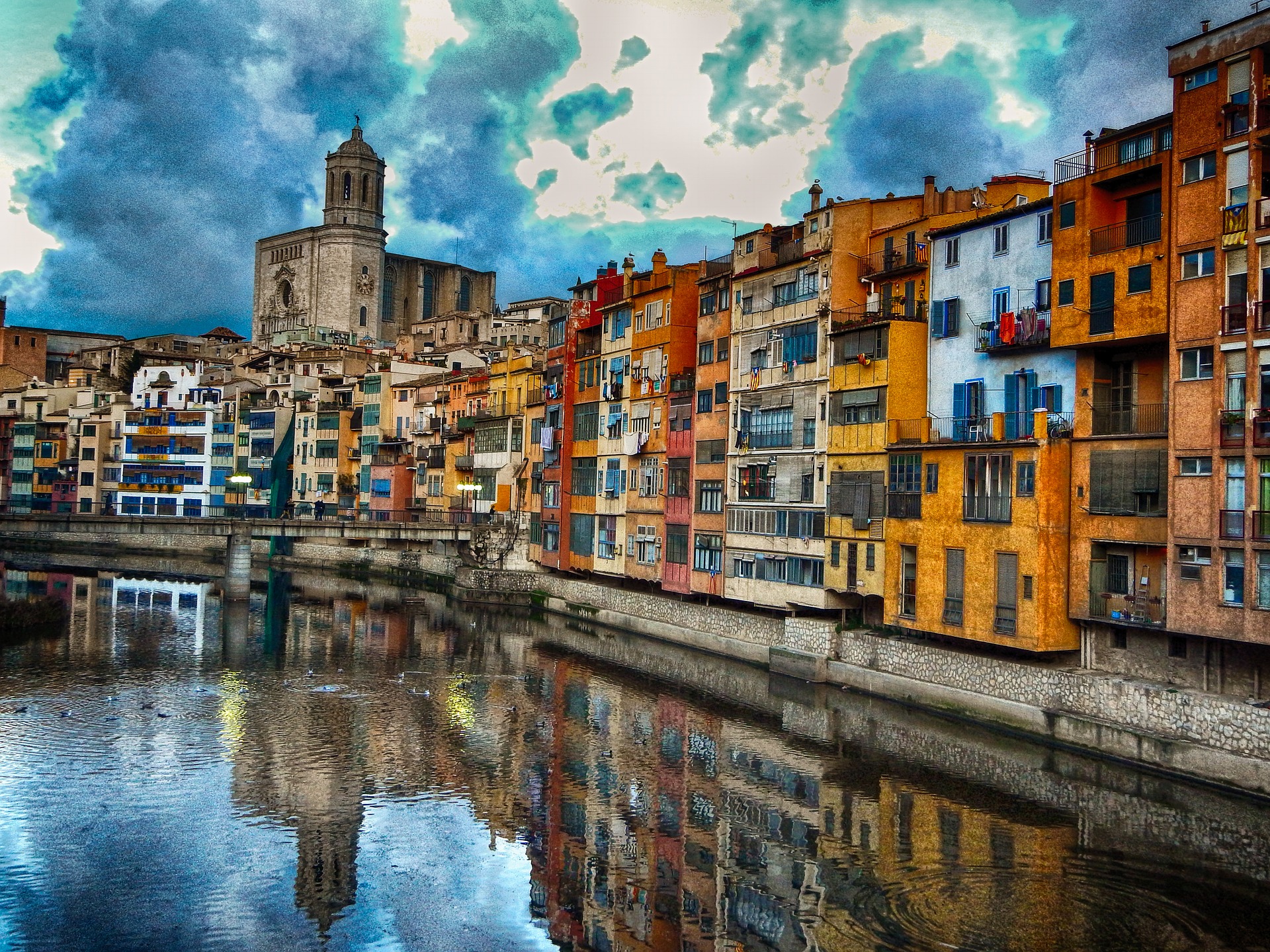
Gerona (in Catalan and officially, Girona) is a Spanish city and municipality, capital of the homonymous province and of the Gironés region, in the autonomous community of Catalonia.
Its historic center or Barri Vell is delimited in the east by the so-called Paseo de la Muralla, the walkway of the old Carolingian walls (9th century) and the late Middle Ages (14th and 15th centuries). Its monuments include the Call, an old Jewish quarter, one of the best preserved in Spain; as well as the colorful Casas del Oñar, built on the banks of the river and very close to the cathedral, with the widest nave in the world in Gothic style.
The history of the city goes back to the settlements of the Iberians of the indigete tribe in the towns that surround and close the Llano de Gerona. Around 77 a. C. Pompey built an oppidum on the Via Heráclea and the Roman occupants founded the original Gerona, called Gerunda in Latin. The new city of Gerunda was repopulated with the inhabitants of the town of San Julián de Ramis, becoming an important center of the region, with the articulation of a Roman ager that surrounded the city. Although Gerunda was inland, away from the coast, it had a good connection with the port of Ampurias.
The city had its first period of splendor as a diocese of the Church attached to the metropolitan see of Tarragona, followed by the ruralization that was unleashed throughout the ancient Roman Empire, due to the general ruin and loss of weight of the citizens. It belonged to the Crown of Aragon like many other territories.
In 2016, the city was awarded the Europe Prize, a distinction awarded annually by the Council of Europe, since 1955, to those municipalities that have made notable efforts to promote the ideal of European unity. It was the second Spanish city to obtain the award, after Santiago de Compostela.

Spain, the world’s leading producer of olive oil

Spain continues to be today the world’s leading producer and exporter, with an area dedicated to olive groves of around 2.5 million hectares.
Olive oil is a product ingrained in our food culture for thousands of years. It was the Phoenicians who made this product known to the inhabitants of the Iberian Peninsula in the 11th century BC. During Roman times the consumption of olive oil spread rapidly, being the Betica province, present-day Andalusia, the main producing area of the entire empire. After the fall of Rome, the use of olive oil was maintained through the centuries to this day.
The continued consumption of olive oil, especially the extra virgin, is an inexhaustible source of benefits for our health, many yet to be discovered.
We offer unique occasions for you to be fascinated with the taste of virgin olive oil and learn about the roots of the Spanish olive culture.
Tastings with virgin olive oil pairing and a professional will show you the most important aspects of the qualities of this product.
New and interesting activities to do during your trip to Spain!